Categories
Data Graphics

Inside HERE

Z

A startup with a billion dollar asset. This is how HERE’s new CEO Edzard Overbeek describes the location services company that is making a striking pitch for being the third major digital mapping and location platform alongside Google and Apple.

HERE has had an interesting recent history. Originally NAVTEQ, one of the major cross-world road network databases, used by various “sat nav” systems, it was bought by Nokia and became Nokia Maps, before being rebranded as Ovi Maps. Nokia then sold its phone business to Microsoft – but as the latter already had Bing Maps, the digital mapping business was spun off into a new unit and sold to a consortium of German car companies. At the time, this perhaps seemed a surprising new set of owners but it has quite quickly become obvious – with self-driving car technology suddenly seemingly closer on the horizon, the need to have a global, highly precise digital map of the world’s streets is suddenly incredibly important – the aforementioned billion dollar asset. Google has been building it up from its initial, low-precision mapping, using its fleet of LIDAR mapping cars, and Apple has been doing the same, arguably starting from an even worse base. HERE has arrived in the space with the highest quality start, having been based on a digital map that is over 20 years old.

The insideHERE Event

HERE was kind enough to invite me to an event, insideHERE, at their European headquarters in the heart of Berlin, for demonstrations of their portfolio, using some of the platforms used recently at MWC, CES and the other major trade exhibitions in the technology and mobile space. They also discussed a few “under the hood” features, and what they are working on right now.

There were three themes, reflecting the three main segments of digital mapping at the moment – business, consumer and auto. A cancelled flight at very short notice (thanks for nothing, Norwegian!) meant that I arrived in Berlin late and so missed the first two. The first can be summarised with the HERE Reality Lens Lens product which provides high quality asset and street furniture mapping for the use and management by local authorities, and the second is encompassed by the HERE mobile app digital app, which occupies the same space as Apple Maps and Google Maps app, aiming to displace these on their respective platforms. This is a challenge of course, as the existing apps are pretty good, so HERE’s unique selling point is that they are designed for offline from the ground up (Google Maps offers this on a slightly more restricted basis, but HERE will be available in offline mode for an area, as soon as you initially load it up online.) Reality Lens and the HERE Offline Maps app are nice pieces of technology that utilise data from HERE’s car data gathering options and make it accessible to public sector and consumer users respectively, but it was clear, both from HERE’s new owners and the comparative length of time used during the day, that HERE Auto is the key sector for the company now.

Geodemographics

HERE have developed geodemographic profiles for car users (drivers/passengers), based on surveys in the USA, South Korea and Germany. Using cluster analysis of the results, they have identified six characteristic types of users, based on how they use cars and other transport options, day to day:
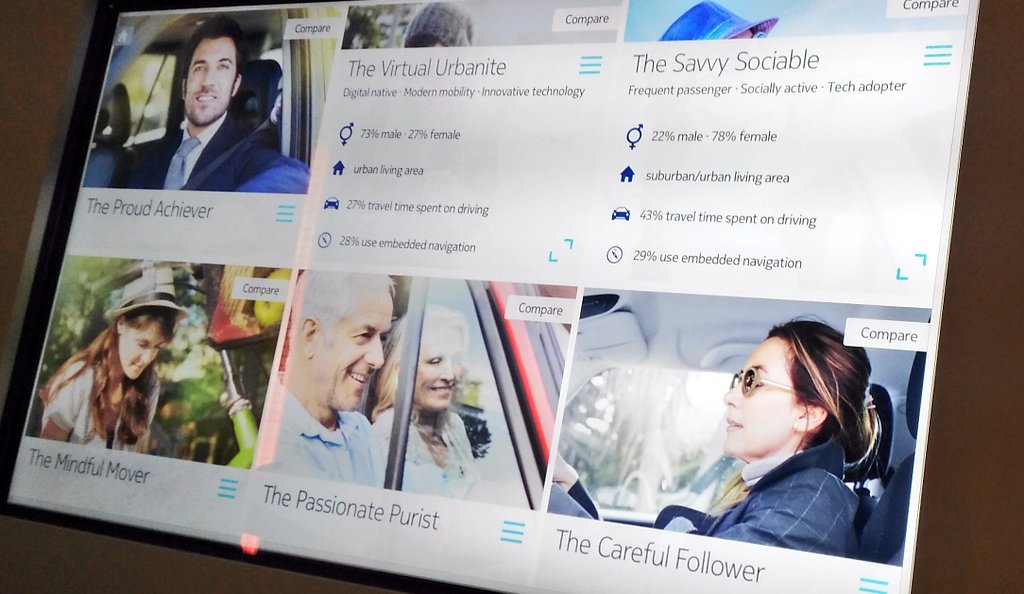
Z-2

Autonomous Navigation Data

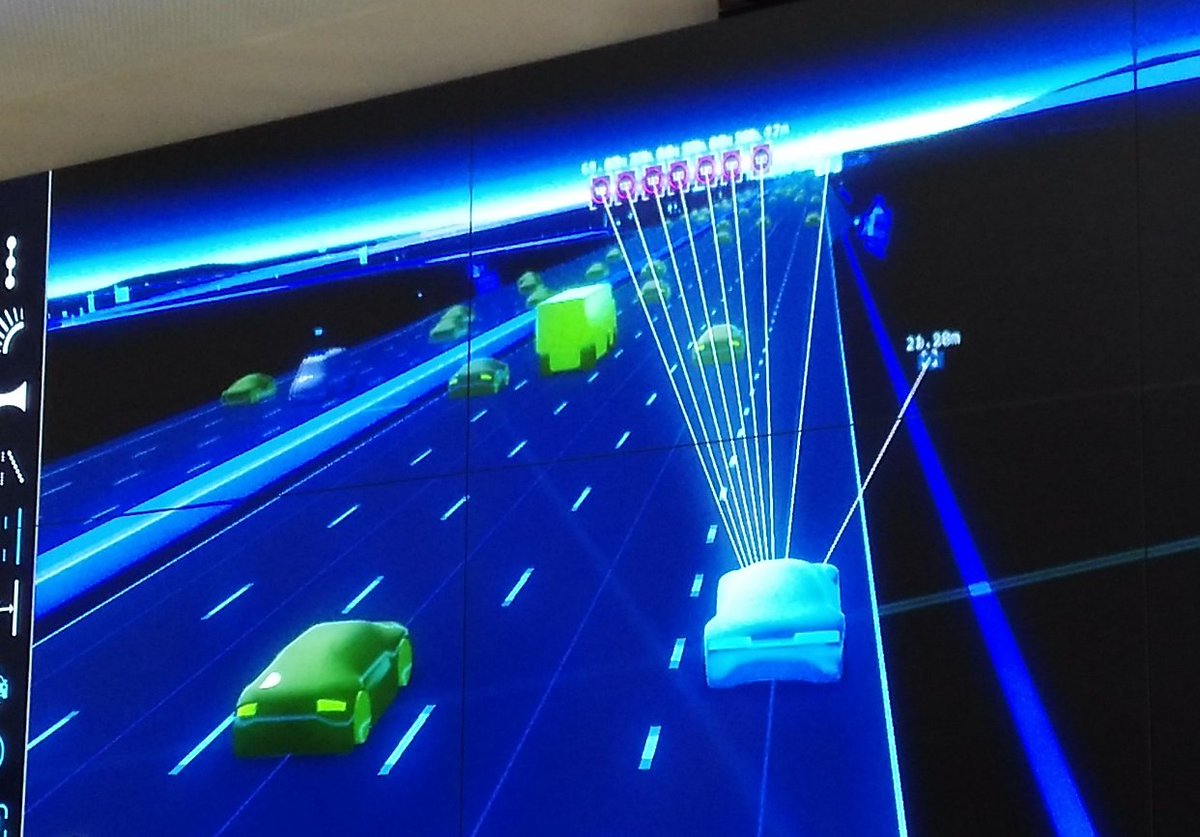
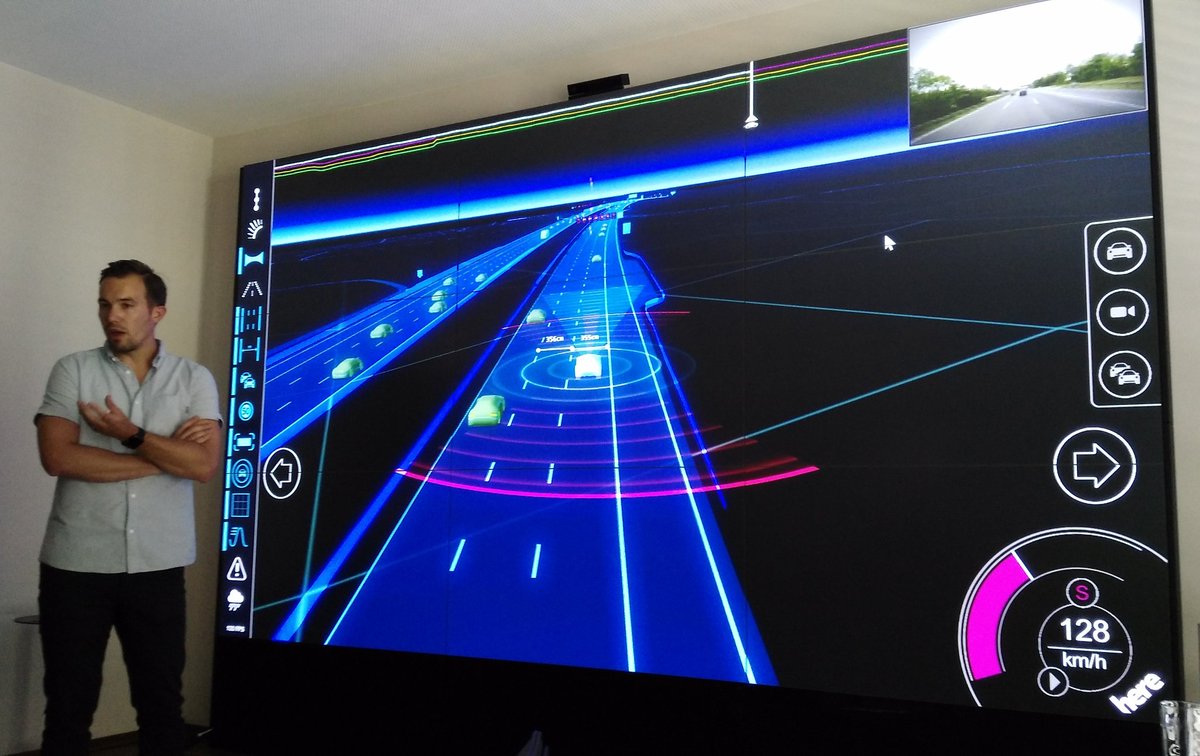
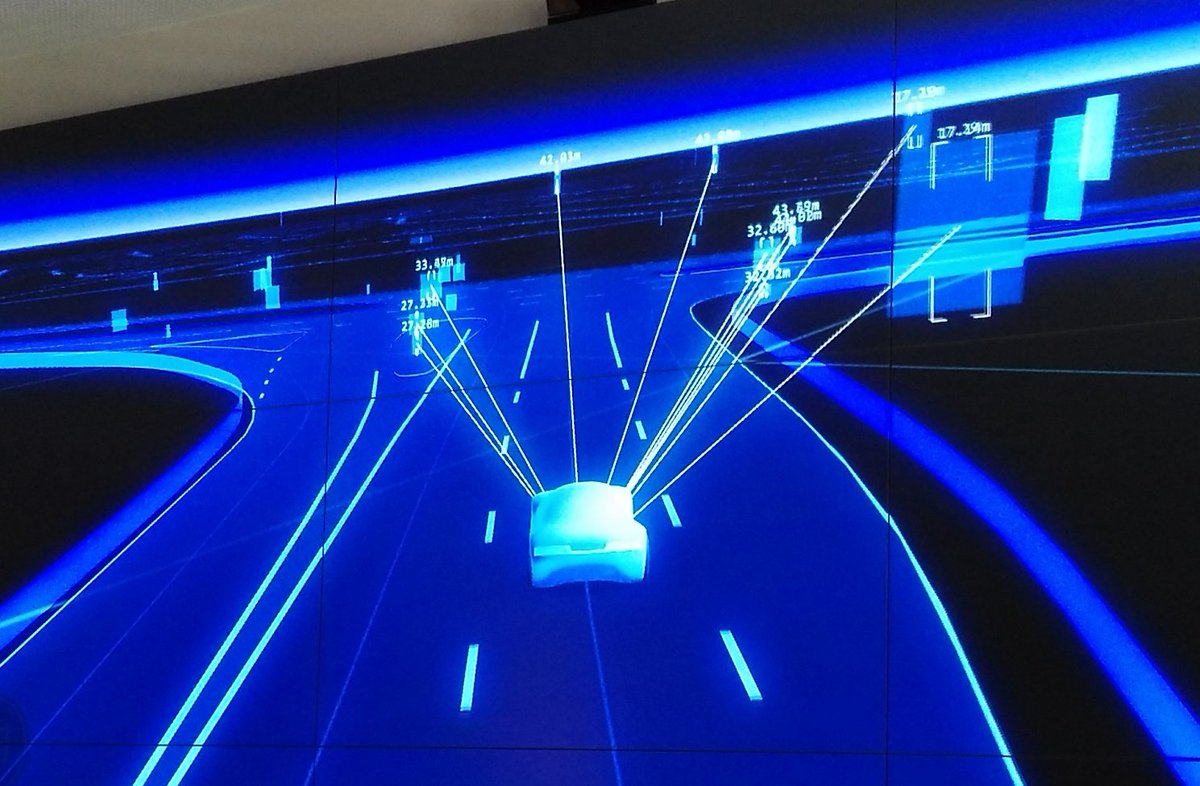
Here’s a visualisation of the datasets that HERE use for self-driving cars. These are datasets designed for machines, not people, and the maps of the datasets, shown here, show the breadth and detail of the information used by self-driving cars to determine road information:
9k=

The data in these maps is highly compressed and delivered to cars, anywhere in the world, in cacheable 2km x 2km squares. (N.B. In one of the three pictures showing the maps of these datasets here, there is a mistake with the data shown. Can you see it? It’s obvious – once you’ve spotted it. No, it’s not that the cars on the wrong side of the road, as it’s showing a German autobhan rather than a British highway. Leave a comment if you find it!)
2Q==

Spatial Data Visualisation

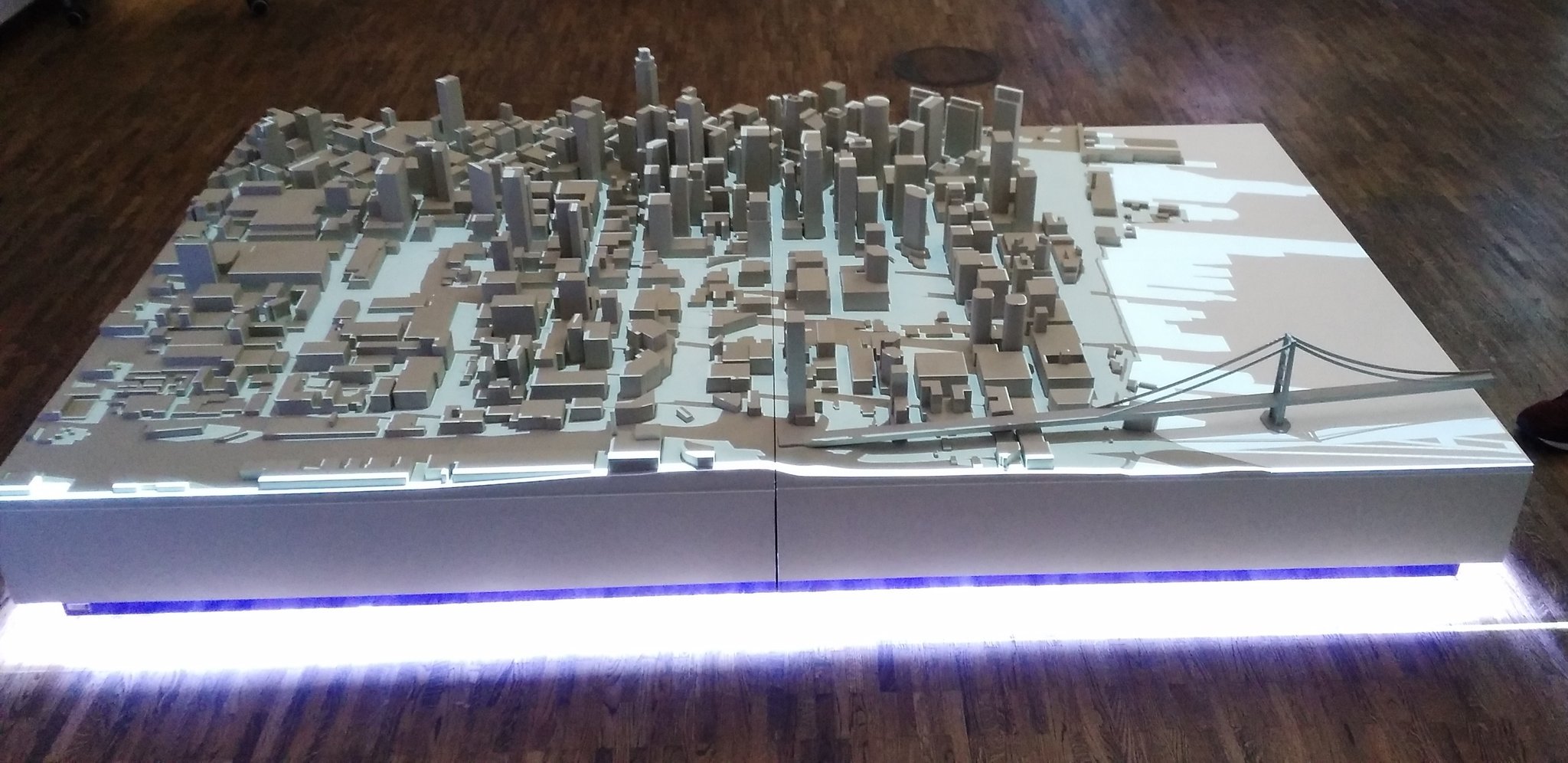
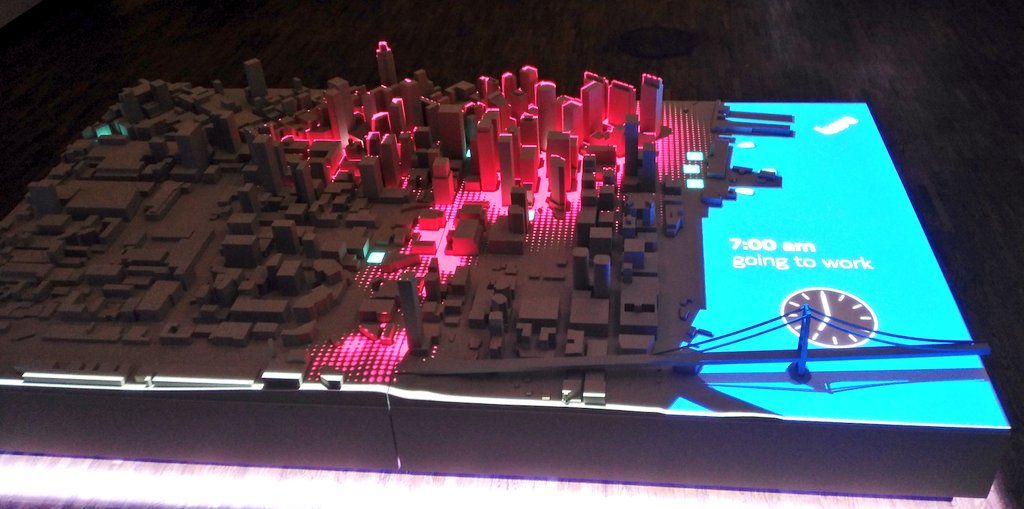
HERE also have some nice demo rigs to show their data in a context that is familiar to people, such as using a top-down projection on a 3D model city section, allowing data to be draped over the buildings and street structure:
2Q==-1

9k=-1

Transit Demand Modelling

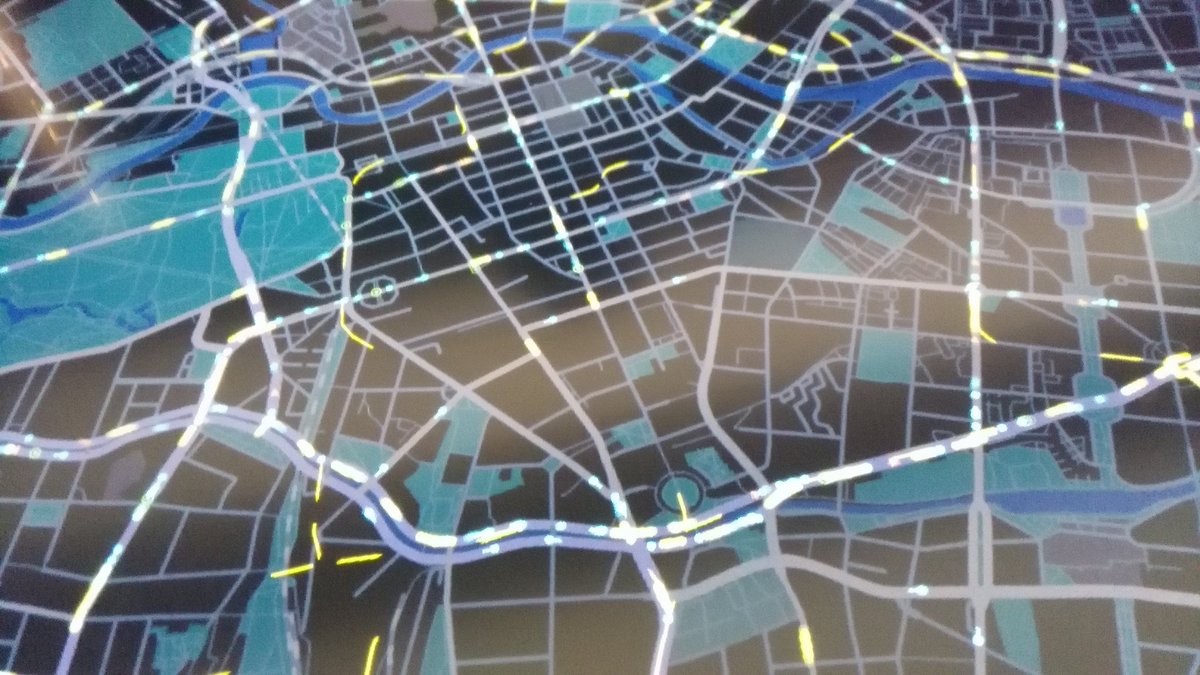
We also saw a glimpse of a microsimulation-based travel demand model (TDM) for central Berlin, with what-if scenarios possible by placing various objects on the screen visualising the output of the model, such as a rain shower or closed road. The transport mode share will likely continue to adjust in large cities throughout the world, while the street network will often remain static, so such models (and associated visualisations) try and predict what will happen on the ground:
2Q==-2

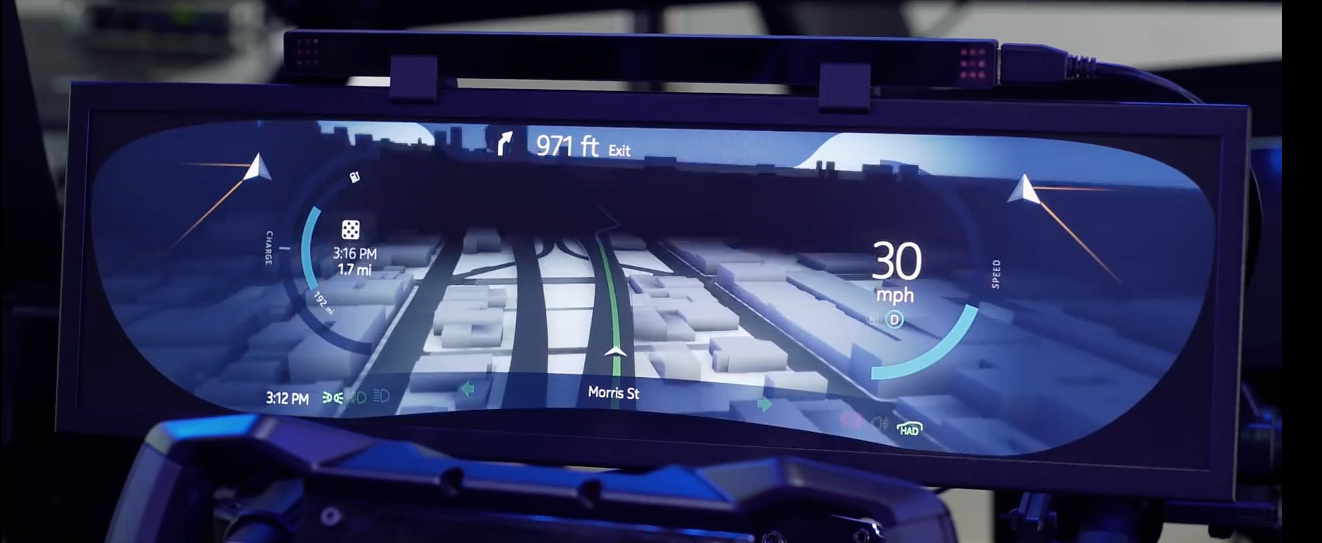
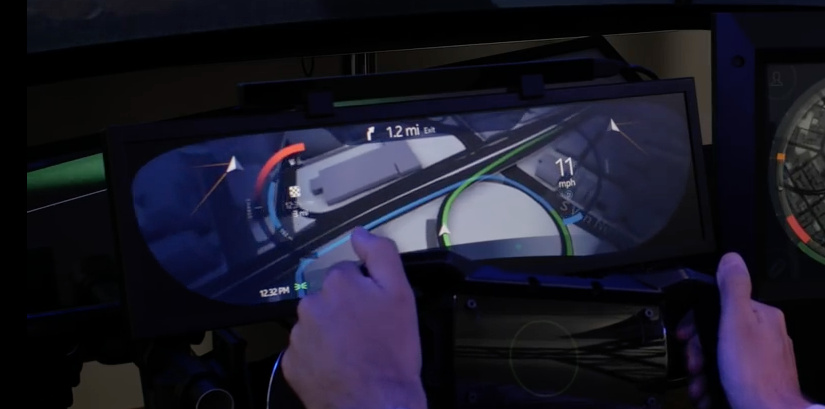
The other maps shown were in the user interface (i.e. dashboard/HUD) of a car test-rig, which is being used for UX/UI testing of autonomous/mixed-mode driving. I wrote about this in this previous blogpost.

HERE and the Future

Perhaps the most “exclusive” part of the day’s event was an hour long “fireside” chat with the new CEO of the company. As a relatively small group (there were around 10 of us)l, this was an excellent opportunity to grill the top-guy of one of the world’s three from-technology digital mapping providers (as opposed to from-GIS like ESRI or from-paper like the OS). Edzard Overbeek answered every question we threw at him efficiently. I quizzed him on whether indoor digital mapping, the “next frontier” identified by Google at least, will also be a priority for HERE given its new driving focus, to which Mr Overbeek was clear that, in order to be a serious player in the space it needs to be mapping everything, so that a single platform is available cross-use, i.e. if a customer journey ends with a walk through a department store, the platform needs to do the “last 100m” mapping too. It’s clear also that the HERE offline maps app will remain a key part of the company’s offering – not just to realise the value of their existing, long-built-up “consumer-grade” mapping, but to build the “HERE” brand to consumers. Ultimately though, their most important clients are the car companies – both the three that own the company but also others needing a “car mapping operating system”.
Categories
Reviews

Testing Map-Based UIs for Self-Driving Cars: HERE’s Knight Rider

https://www.youtube.com/watch?v=8kSwtVVsx_8&feature=youtu.be

I was kindly invited, earlier this week, to take part in “insideHERE” in Berlin, a small event run at the HERE HQ in Berlin. HERE, being born out of the ashes of Navteq and Nokia Maps, is now owned by a consortium of German car companies. For the special event, HERE’s developers and engineers opened up their research labs and revealed their state-of-the-art mapping and location services work. HERE Auto is making a real play to be the “Sat Nav of the future”, competing directly with Google and Apple to create, manage and augment data between your smartphone and your car. Tomorrow I’ll outline the general visualisation work I saw that demonstrates their high-precision spatial datasets, but first, today, I mention one particular research project which shows how maps will be continue to be a crucial part of driving, even when cars drive themselves.

“Knight Rider” is a test rig, built to simulate a car, where the engineers and UI/UX designers can try out different configurations and locations of controls and maps on a dashboard. They key aspect being tested is how much trust the user can place in the car, based on what they can see and information that is displayed. Testers can sit in the “car” and drive it, to experience map/control designs and, crucially, how it feels to give up the steering wheel but continue to have the confidence that the journey will proceed as planned! Large exterior screens, fans and a windshield provide some depth of realism. The intention is not to create a realistic driving simulator, completely with fully photorealistic buildings and roads, but instead to get the tester as comfortable as possible to evaluate the designs effectively, before they are put in a real test car on the road.

When we saw the rig, it was configured with maps in three places – a short but wide one that wraps across the dashboard, a circular map that sits just to the right of the dashboard, beside the steering wheel, and finally a heads-up display (HUD) that reflects in the windshield, this achieved by a carefully angled screen pointing upwards.

The dashboard map shows a single map, behind the regular digital numbers/dials you would expect on a normal dashboard. The map here switched between a general 3D overview of the journey ahead, when “cruising”, to a more detailed, but still a “helicopter” 3D view, when carrying out manoeuvres such as approaching a destination or a complex junction:

dashmap1

dashmap2

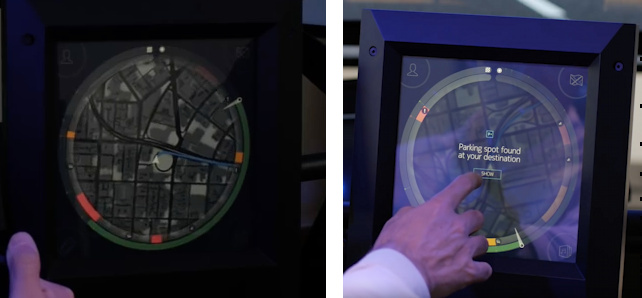
The panel alongside typically shows an overhead map, in a circle with your location on the centre, it rotates as you move:

circlemap
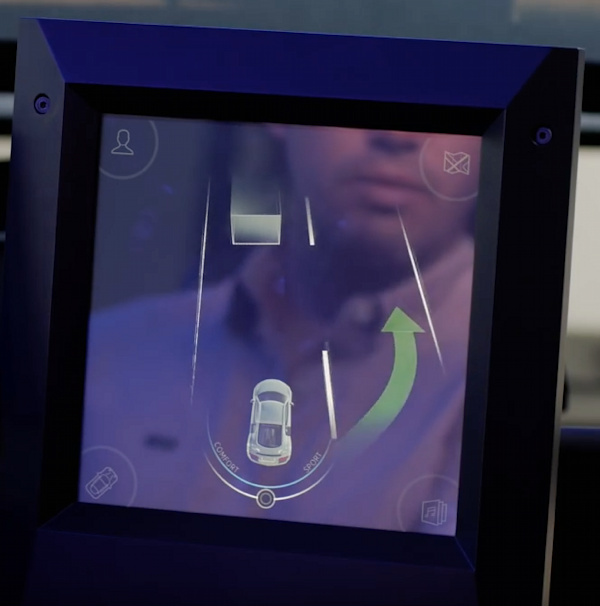
It is also the main drive control panel when not steering, for example if you want to tell the car to overtake a car in front, the AI having decided not to do so already – you are not steering that car here, but “influencing” the AI to indicate that you would like it to do this, if safe:

circlemap2

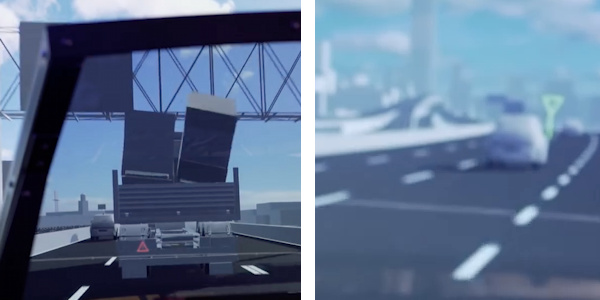
Finally, the HUD necessarily does not show much information at all, apart from a basic indication of nearby traffic (so that you are reassured the computer can see it!) and any indication of hazards ahead. You mainly want to be looking though the window for the traffic yourself, of course:

hud

The key interaction being tested is changing from human to computer controlled driving, and back. The first is achieved by listening for the comptuer voice prompt, then letting go of the steering wheel once asked to. If you don’t retake control of the car when you need to, for instance as you are changing onto a class of road for which autonomous driving is not available, and you have ignored the voice prompts, then then the car will park up as soon as it’s safe to do so.

It’s an impressive simulator and crucial to shaping the UI of the autonomous cars which are starting to appear on the horizon, in the distance, now.

Photos and video courtesy of HERE Maps.

Categories
London

Open Doors: 22 Bishopsgate

22bishopsgate_1

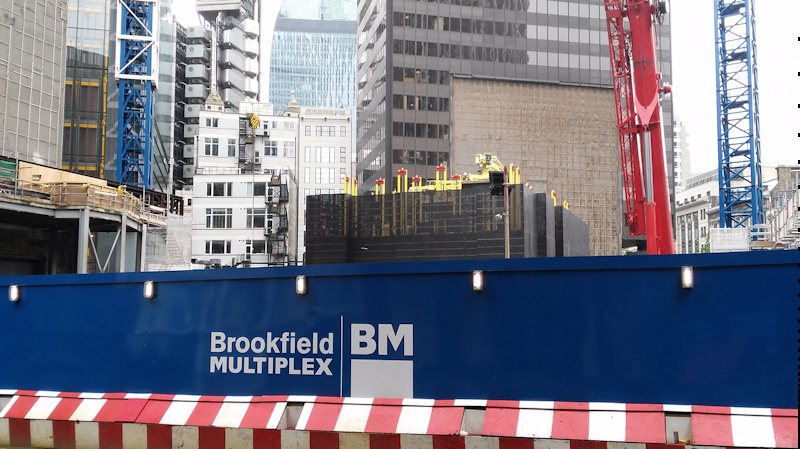
It’s Open Doors week this week, where the public get a glimpse into many construction sites, and this morning I visited the site of 22 Bishopsgate, in the City of London. The site itself has an interesting recent history – it was going to be the Pinnacle, an elaborate, spiraling skyscraper. But construction stopped as the downturn hit hard in 2011, and for the last few years, it’s been nicknamed “The Stump” – an abandoned nine-storey concrete core. It’s taken Brookfield Multiplex, the chief contractors for the new skyscraper, around a year to dismantle the old core, by slicing up the concrete into 8-14 tonne sections, lifting them out, digging back down into and rebuilding the basement to the new design. Finally, pretty much in the last few weeks, they’ve been able to stop digging down and start building up again.

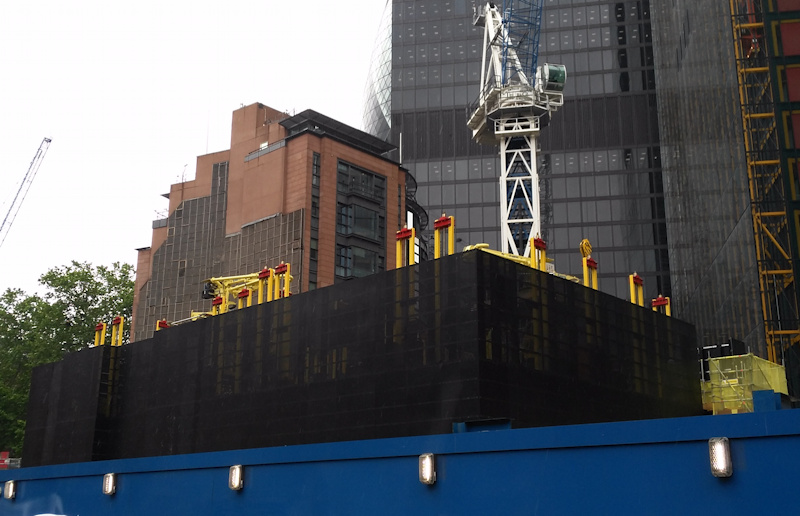
The building will start to rise quite quickly in the next few weeks. The new design consists of two cores – a square-ish one, which will lead a rectangular one alongside. This reflects the non-square shape of the site – it being narrow to the north than to the south, and squeezed to the east by the Cheesegrater and the long-suffering Hiscox building. Both will rise by around a storey a week, with the square one leading the rectangular one by around five storeys, and the metal structure of the floors surrounding the cores another five or so storeys below. Currently, the main core is 2-3 storeys up already and is about to start its long continuous rising phase. The rectangular core, which we looked down on from the elevated viewing platform, is a storey below ground level at the moment, and today is having a temporary wall added to the top of it, creating a platform and work area “raft” that will rise up with it. The square core already has its temporary wall erected, coloured black and made of perforated steel, and can be seen as the main feature in both the photos above and at the bottom, surrounding a small yellow crane and other yellow machinery that will sit on the raft.

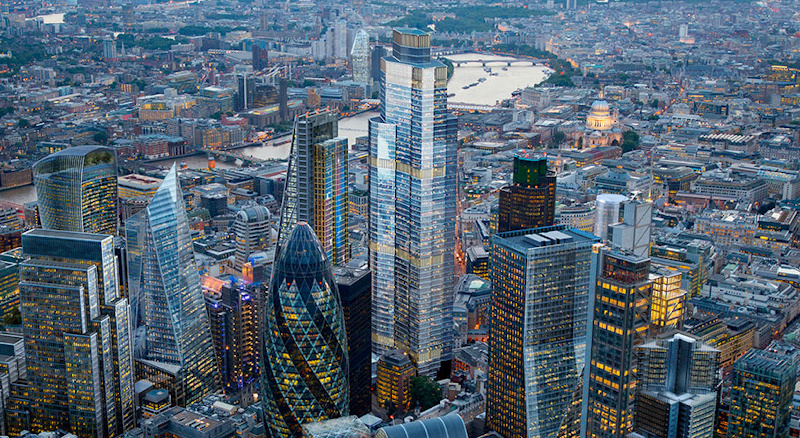
Even with a storey-per-week rise, this process will take more than a year, for 22 Bishopsgate will be a huge “slab” type skyscraper, with vertical walls, stretching an impressive 64 storeys high. It will be only marginally lower than the nearby Shard skyscraper, at 278m. It will fit snuggly in to the skyscraper cluster of the Cheesegrater, Gherkin, Natwest Tower and various others. The design is not “exciting” – it is a straight up-and-down building which is using up its full footprint, but his means it will provide a good balance to the nearby flamboyant Gherkin and Walkie Talkie building. In this artist’s impression, in which it is the obvious tallest building in the cluster here, it looks like an updated, taller/wider and glassier version of the classic Natwest Tower nearby which is just to the right hiding behind another under-construction skyscraper, 100 Bishopsgate:

22_bishopsgate_impression

From the viewing platform, we could also see active work going on for 100 Bishopsgate, just up the road as the name suggests, as well as the recladding and height extension of One Angel Court, and finally a very small tower going up in the small space between Bishopsgate and the Natwest Tower. As part of this latter project and 22 Bishopsgate itself, the Highwalk around the Natwest Tower has now been completely removed. This is a shame – it was a largely unknown but nice elevated walking space. However, I understand that the Highwalk will be rebuilt once both projects are complete, so we will once again be able to walk above the roads and amongst the towers.

Unfortunately we weren’t allowed to take photographers on the tour, but you can see the square core clearly from Bishopsgate now – see the photos here. Our wooden-clad viewing platform can be see in the background of the first photo, on the left.

22bishopsgate_2

Middle image is an artists impression of the completed cluster, from Lipton Rogers.

Categories
Leisure London

A Glimpse into Walthamstow Wetlands

I was on a guided tour of the Walthamstow Wetlands today, a huge area of 10 historic reservoirs that has long been the preserve of fishermen, birdwatchers and water company workers, that is about to be turned into a large, publicly accessible nature reserve. The area is near to the Woodbury Wetlands, which similarly was a largely unknown area of water and reeds that has now been opened up, the guest of honour at the opening ceremony last month being none other than Sir David Attenborough. However, Walthamstow Wetlands is ten times larger, and the London Wildlife Trust, who are delivering the tranformations in both areas and led today’s tour, describe Woodbury Wetlands as just a “dress rehearsal” for the Walthamstow Wetlands area, which is 6 times the size and is due to open in 2017. It will be far and away the largest area of wetland habitat in London and one of the most important in Europe.

ww_reeds2

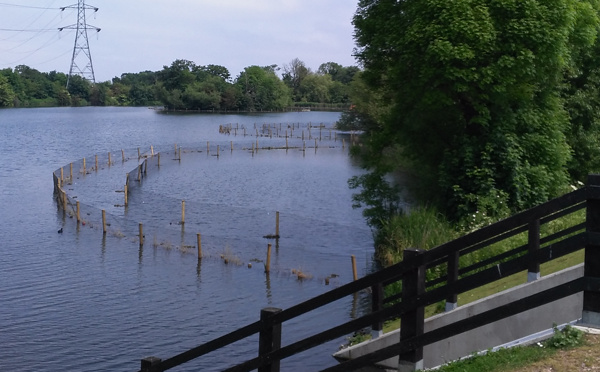
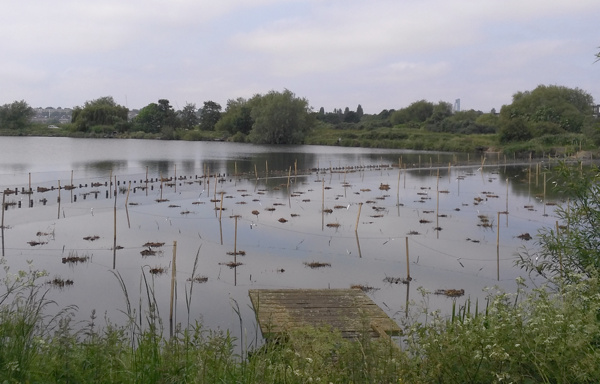
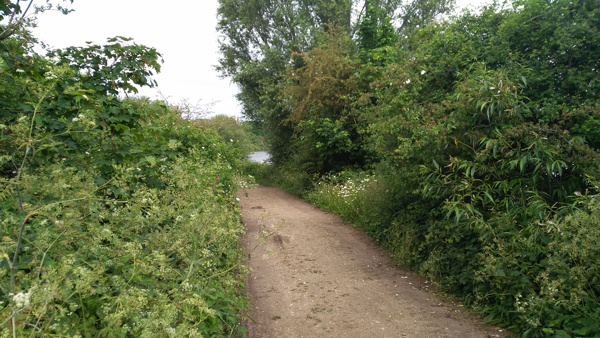
The area is already teaming with birds, other animals, and wildflowers, and some early signs of the conversion are already in progress, compared with my previous visit a few years back. The surface has been laid on a new walking/cycling route that will run the length of the reserve, with two new entrances being created at either end to complement the only current access which is from Ferry Lane in the middle of the reserve. Several areas have been fenced off in the Reservoirs 1, 2 and 3 – the earliest, hand-dug and shallow ones, the aim being to turn these into areas of reed beds to encourage bitterns back into the area. The two main islands, Heron Island and Cormorant Island, are full of their respective birds – the latter island being largely bare of vegetation and full of the squarking animals. Other wildlife spotted included a variety of geese and ducks (some as families), some large fish (the area is a major spot for angling) and many dragonflies. Also, somewhat less fortunately, there was a grass snake near the entrance – run over and squashed presumably by estate traffic.

Plans include complete renovation of the historic engine house in the middle of the site, to act as the main visitor centre, cafe, exhibition and an education facility. The house will have part of its tower rebuilt with hollow bricks, to encourage skylarks to nest. The renovation is well underway with the building gutted and in scaffolding. Various bits of machinery from its days as a pumping house will be retained, although the main pump itself was removed many years ago. At the southern end of the reserve, the central part of the Coppermill building will have a lift added, allowing access into the tower for a great view over the reserve. The look of the building will be carefully preserved, this means the lift will not make it to quite the top of the tower. Access to the reserve, centre and viewpoint will all be free. Possible future plans, subject to the success of the reserve and its ability to be self-funding following opening, will be a second small visitor facility being built in the rest of the Coppermill building, which, for now, remains a storage site for Thames Water.

ww_wildflowers

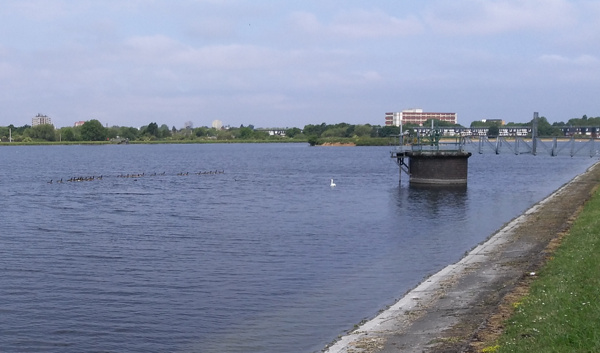
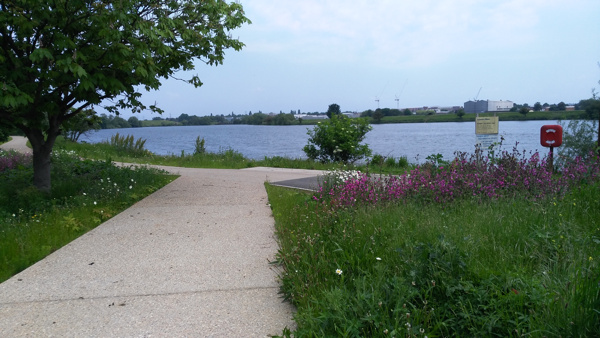
Top and second: Preparation of the new reed beds. Above: One of the tracks through the reserve, which has had bracken removed and has been planted with wildflowers to encourage different kinds of birds. Below: Geese and a swan on another of the reservoirs. Bottom: Looking from Ferry Lane into the north part of the wetlands, which was not part of today’s tour.

ww_water

There is more information about the project on the official website.

ww_north