The Guardian newspaper has published an online article about the rise and fall of dockless bikeshare, focusing on the pure dockless systems in England (there aren’t any in the rest of the UK) that grew in 2017, and then shrank last autumn. The article extensively used some of the geospatial boundary data that I have – you can can see this on Bike Share Map. It also used some estimated counts and also looked ahead.
Meanwhile, there are various clues as to the next wave of dockless bikeshare, here in London. It looks like there are going to be at least five, possibly six players this year that will be complementing and/or competing with the incumbent Santander Cycles system that still has more bikes on the streets (10000) than all the pretenders put together:
Mobike, after their summer expansion and autumn radical contraction, appear to have got things under control and have started expanding again. They remain operating in two main areas – in west London (around Ealing, Acton & Chiswick) where they are not competing with Santander Cycles, and in central London (Camden Town, Bloomsbury, Angel, Bankside and the City of London) where they do. They are keeping their operating areas small, and their densities high, and are staying out of the inner city London areas where they will have had great numbers of their bikes stolen and vandalised. This is an eminently sensible business decision even if it restricts the usefulness of the system in a broader London context. Their fleet is largely upgraded to the Lite model which is much more comfortable to ride. No sign of any pedelec (electric assist) yet. They still have a very high out-of-zone charge, which coupled with their often changing operating boundaries means that users need to do some research before hiring, to avoid unexpected penalties. This lessens the scan-and-go readiness of the systems. There are around 1800 in the fleet currently.
Lime‘s pedelec system was looking good, with a carefully run system with no penalties for starting/finishing out-of-zone (as long as you don’t go out of London itself). Although I found the actual cycling experience not amazing, I am probably not the target market, and right now it is making a positive contribution to London’s Mobility as a Service (MaaS) options. However… Lime in the US have had a change of policy recently, switching all their pedelecs to escootershare. This doesn’t bode well for London in the long term, as the large MaaS companies are all about economy of scale. Maybe London will be quickly and genuinely profitable for them, and they’ll keep running the system here. We shall see. They currently have around 1400 bikes in their fleet in London.
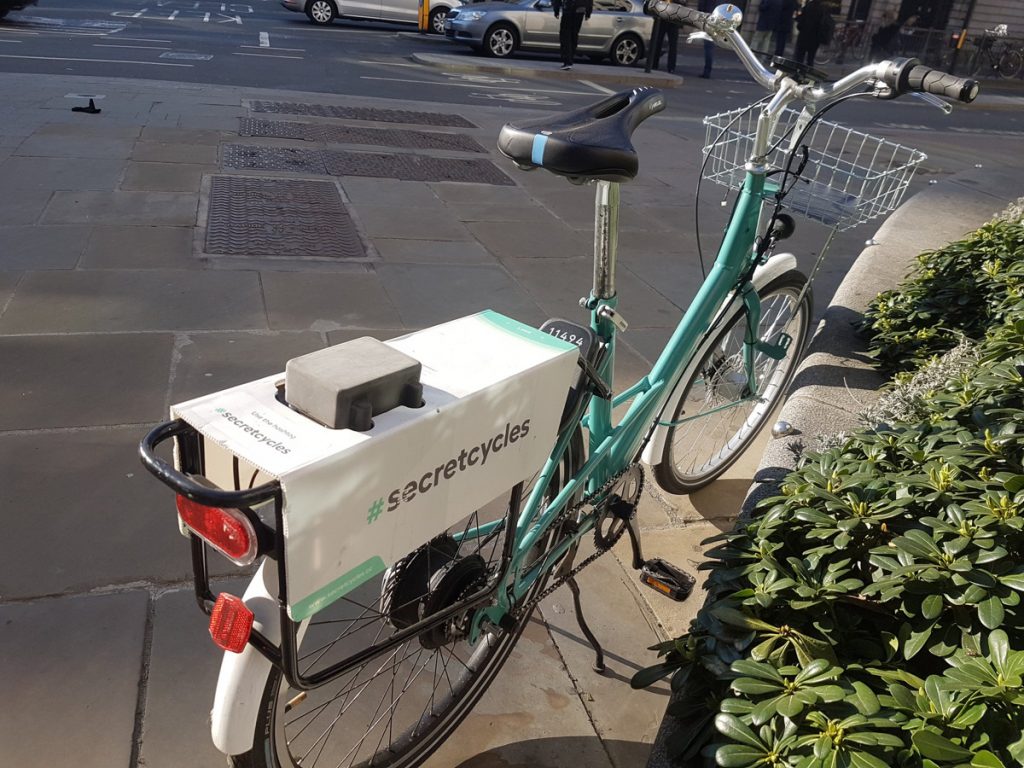
Beryl’s Secret Cycles pedelecs remain in active pre-launch development. They are being developed right here in London and the group are taking time to get it right. The odd Secret Cycle is occasionally seen on the streets of London, and a council test is taking place in Enfield. It looks like they will, after launching in Bournemouth, be bringing their system to Islington, Hackney, Tower Hamlets, and presumably also Enfield. There are currently around 10 in their fleet, none for public use.
Freebike pedelecs are currently being tested by Waltham Forest council employees, so it may be launching there at some point soon. However, a City of London decision suggests they may also be coming to the heart of the capital too. This is a small place so having all the various operators in here could be interesting. However, half a million people do commute into the so-called Square Mile every working day, so there is always going to be a big focus here. There are currently around 10 in their fleet, none for public use.
JUMP pedelecs are also likely coming. Their parent, Uber, had a job posting out for a London-based operations/field manager. With Lime’s US pedelec retreat, JUMP are the sole US-based pedelec system and are increasingly finding they are the only bidders for US city dockless systems. London’s competition will be harder, thanks in no small part to escootershare remaining illegal here. JUMP will likely go big when they launch. They will also be able to leverage their huge existing base of London Uber users – no separate app needed!
Finally, and this is pure speculation on my part, but YoBike runs some reasonably successful systems in Bristol and Southampton. The platform that YoBike is part of is SharingOS, and they are based in London. I am sure they would to have a physical system a little closer to their base.
If there are going to be 5+ systems in central London, then the authorities are really going to have to get their act together re managing parking for these fleets. A mass expansion of cycle parking hoops, or taping rectangles on pavements for them, is going to be needed.
A Beryl Secret Cycle on test, spotted in the City of London. Photo courtesy of Angus Hewlett.
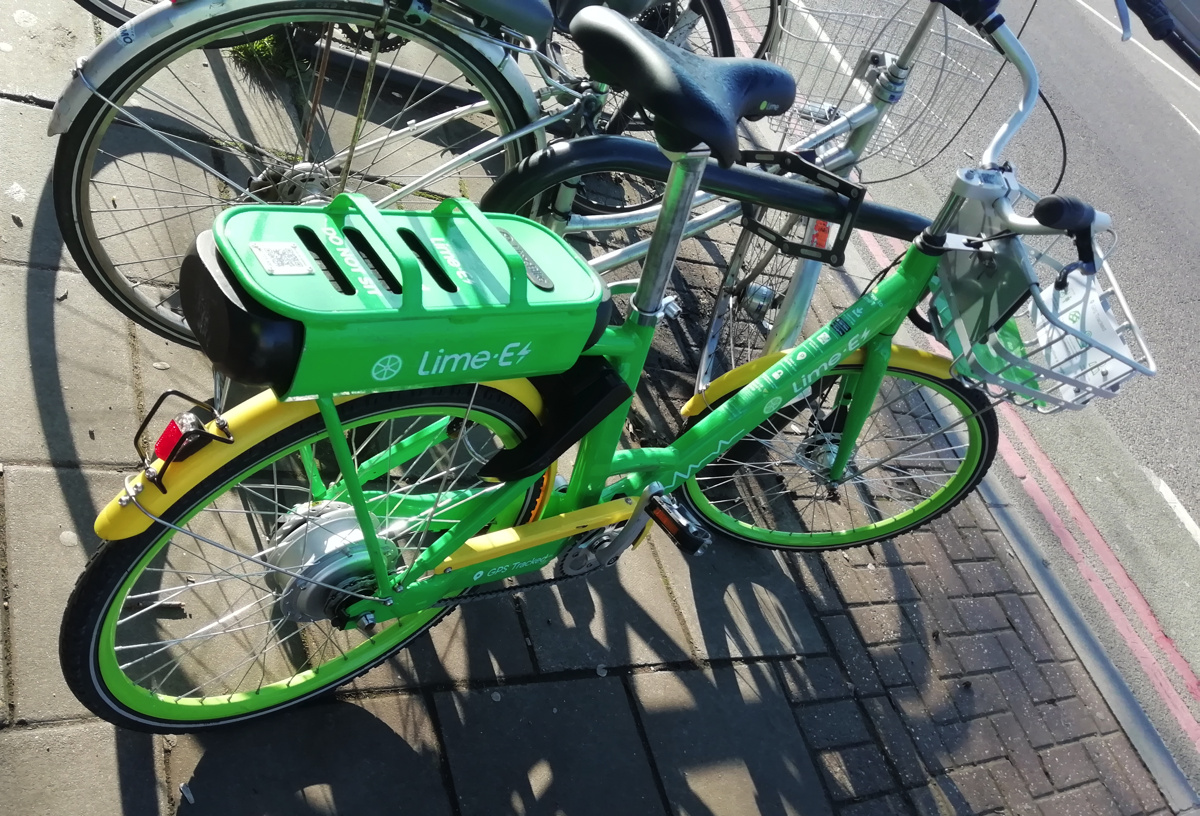
A puncture on my own bicycle on my way in to work this morning found me grinding to a halt outside Manor House station – not the worst place to have a flat tyre, as the tube from there will take me into work in around 20 minutes with just one change, for £2.40. (The other option was a single bus for £1.50, taking 30 minutes – although easily longer if it gets snarled up in traffic). But as I dropped my bike off in the bike stands beside the entrance, I noticed another bike – a chunky, green-and-yellow coloured beast. It was a Lime-E bike – London’s only (so far – others coming) electric bikeshare, also parked beside (but not chained to) a stand:
Surprise mobility option, sitting at a bike stand in North-East London.
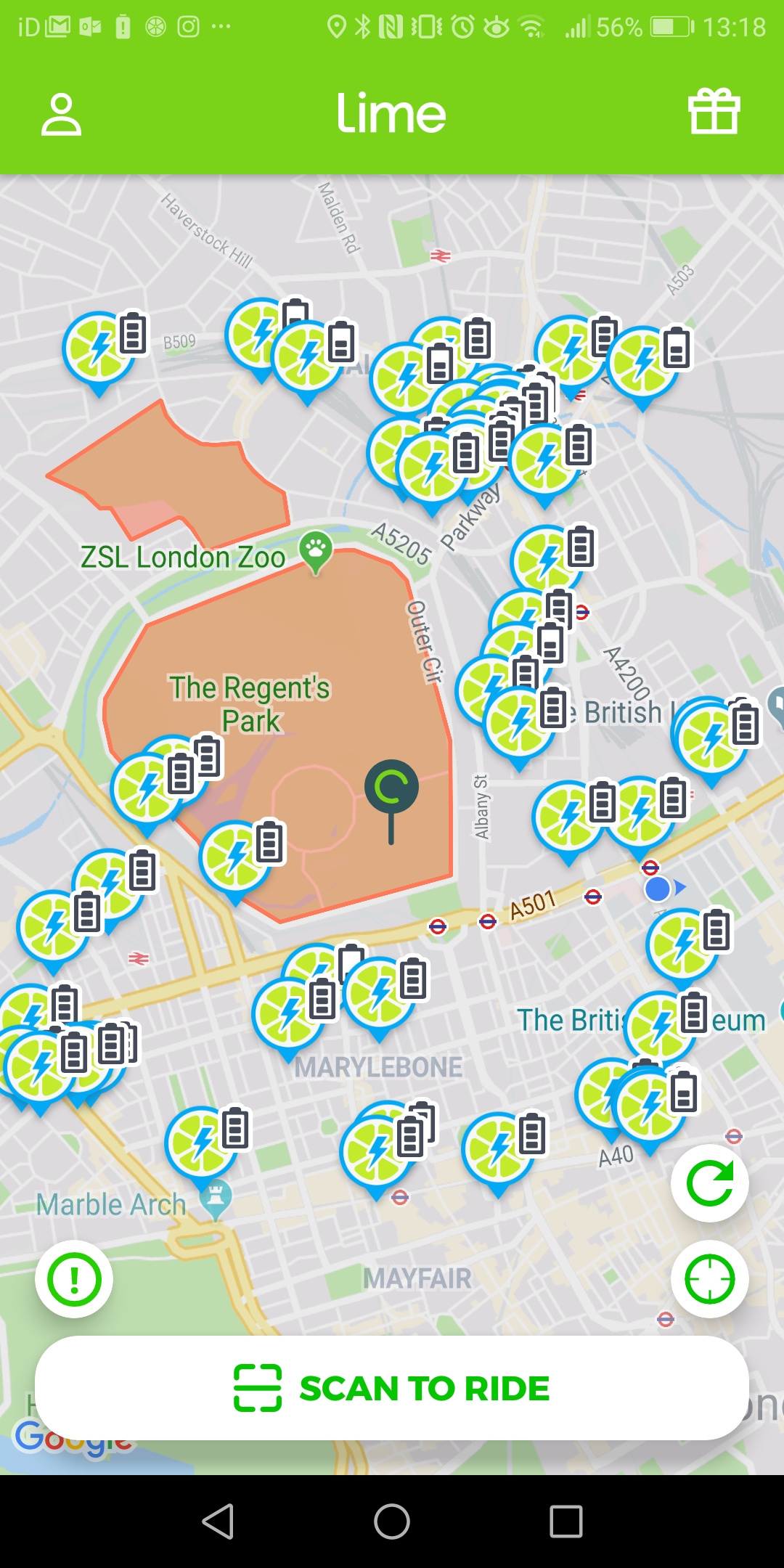
It was well out of zone but Lime (currently) allows hires starting and finishing out of zone – a pragmatic decision presumably based on the lack of cross-borough policy, the bikes being relatively well managed by the operator, and there not being too many of them cluttering up and causing non-user complaints:
Plenty of out-of-zone Limes available…
I hadn’t tried Lime so far, although it launched last December – I was put off by the £1/hire+15p/minute cost – that adds up quickly. But, I needed to get to work and it was right there. Surely this bike could prove to be an effective alternative mode of transport, for my immediate commute requirement?
I already had the app installed on my Huawei smartphone, but had not put in payment details – only when trying to scan did it prompt for a payment card. Android Pay stepped in to automatically add my credit card details, however Lime didn’t like the two-digit year supplied by Android, requiring a reenter of that section.
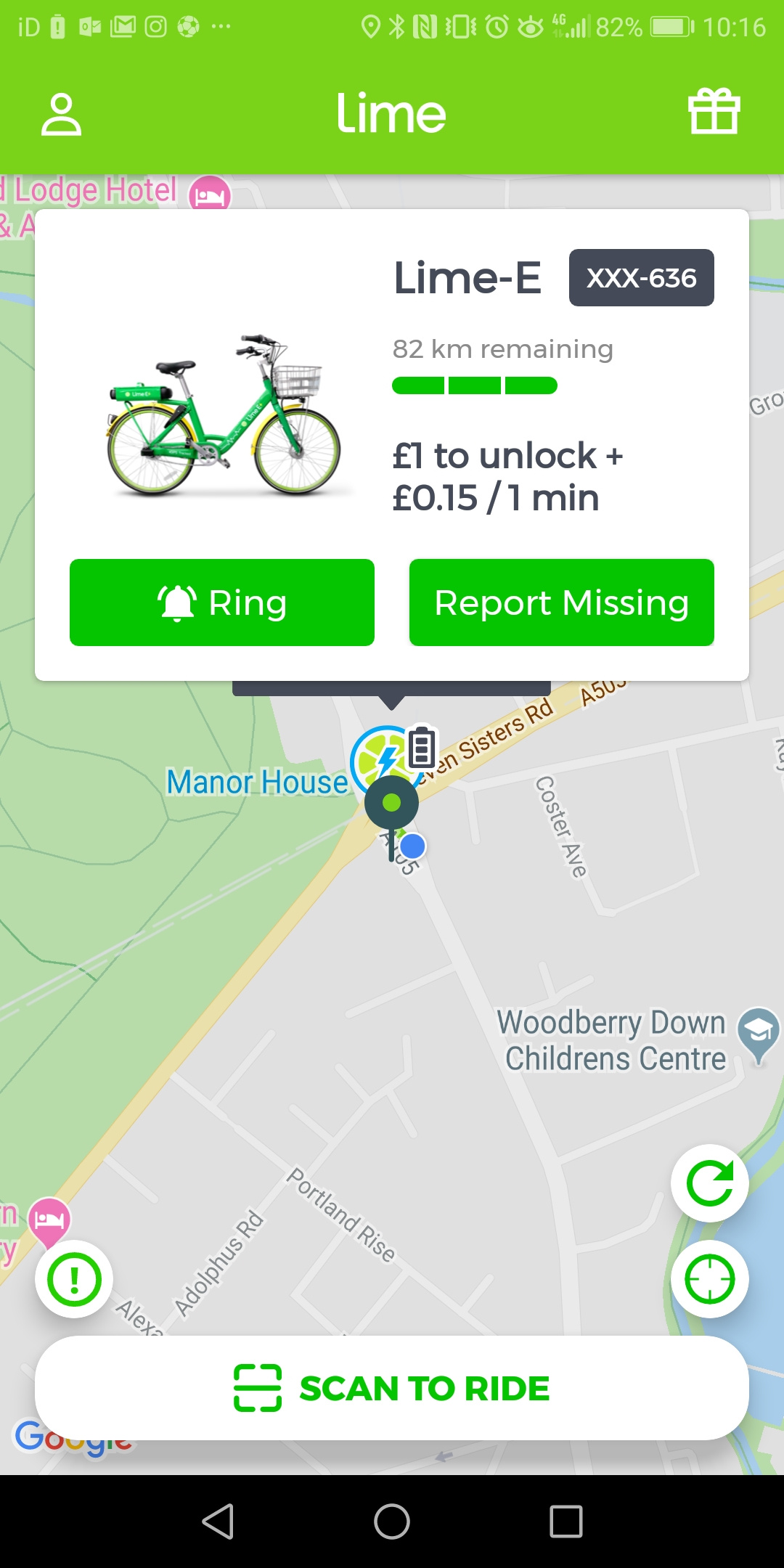
The app confirmed that this was a hireable bike and that it had a decent amount of charge on it – 86km! I could almost get to Oxford with that:
My ride. Looks good on the app and in real life.
Then, a rescan and the bike unlocked with a click in a couple of seconds. (Interestingly, the wheel-lock was quite a small one, not the chunky ones that appear on Mobikes now to try and stop rampant theft of them.) Something (the bike, battery or the app – not sure!) played a jolly tune to indicated success, and I was off. Unfortunately I quickly noticed the bike loudly jolted with each wheel turn – possibly a buckled spoke or other problem with the wheel – it was not enough for me to abandon the journey, but was not something I would leave before fixing. Later on, something else made a plastic rattling noise at the back of the bike every time I pedalled. Maintenance (or lack of it) was a problem with the non-electric dockless bikeshares in London. I was hoping that the more expensive electric bikes would have a more rigorous repair regime. Maybe they do and I was just unlucky.
The initial acceleration boost given by the battery was great – straight across the lights and down to Finsbury Park. However, almost immediately it just felt like a regular bike – there was still a boost at faster speeds, but it felt like it was just countering the heavy battery, rather than genuinely making it easier than a regular bike. I didn’t feel slower than my regular bike – but it didn’t feel like it was any less effort either. There is only one gear, so the only thing you can do other than pedal, is to ring the handlebar bell. The gearing is OK – it’s certainly better than the Mobike/Ofo/Urbo ultra-cautious setting.
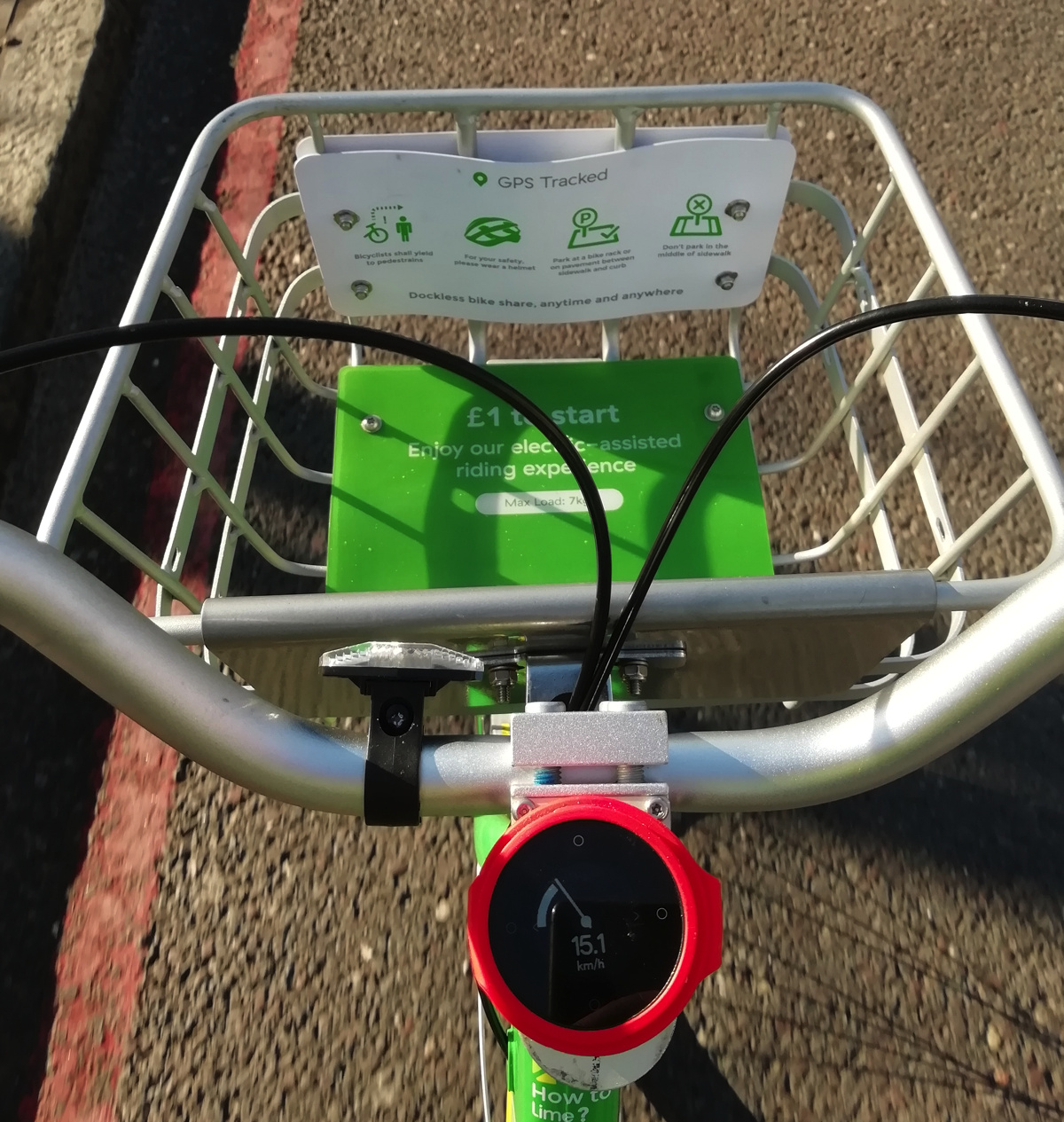
I was keen to measure the “configuration” for the electric-assist, so stopped after around 3km, at the bottom of the main remaining uphill on the route – up Camden Road past the old Holloway Prison – to attach my Beeline smart compass – not for its primary navigation purpose, but to get an idea of the speed I was travelling at. The speedometer function has rather nice analogue-style needle, and was a useful way to see my speed without looking at my phone, even if it is based on my phone’s GPS and therefore lags by a few seconds.
Beeline smart compass on a Lime bike – testing the electric assist at different speeds.
It was undoubtably nice to accelerate up the hill with the battery doing the initial work. It seems that, between 0km/h and around 12km/h, the battery does most of the work. From around 12km/h to 20km/h (my normal peddling speed) it gives a slight assist – not really noticeable but presumably useful for longer journeys. From 20km/h to the legal maximum 25km/h I’m not convinced the battery was helping at all – or if it was, it was just partly countering the weight. It was hard to pedal the bike above 25km/h even downhill on a clear road – but that’s presumably by design – bikeshare is generally meant for quieter roads and less experienced users, where a slower speed is safer, rather than me trying to match the vehicular traffic on a sometimes busy “red route” major road.
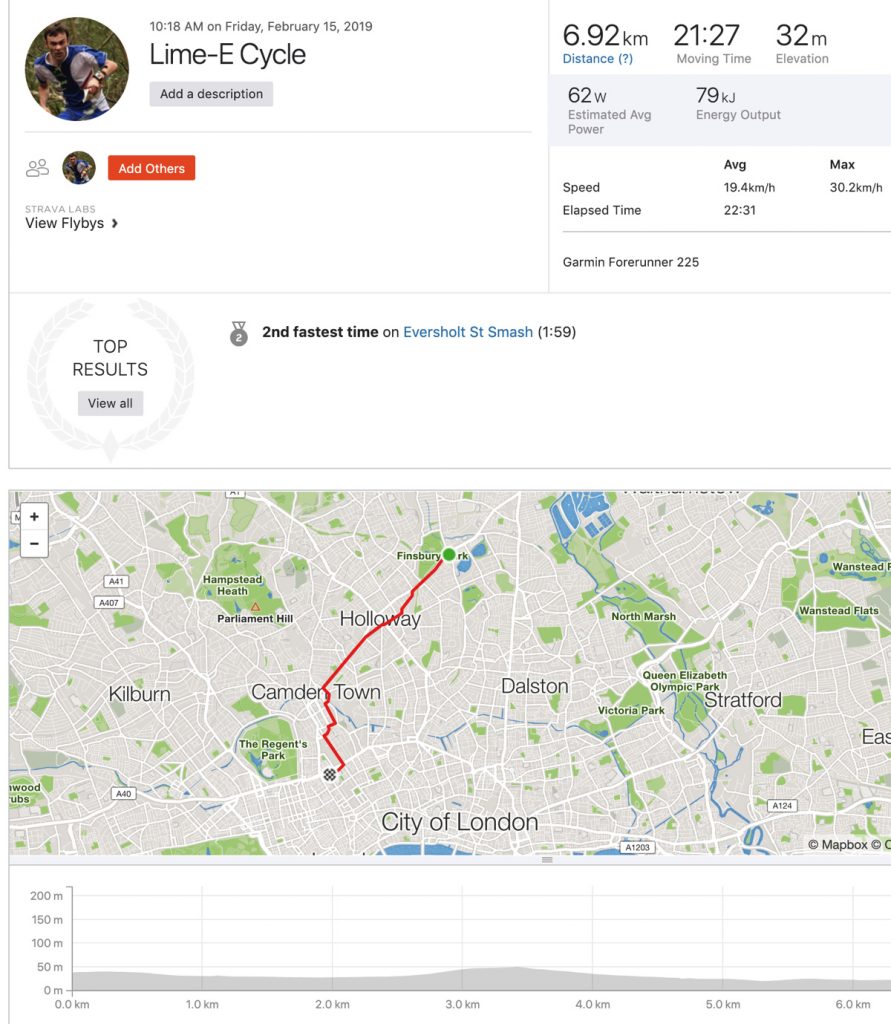
However, it would be nice to have a much bigger boost between 12km/h and 20km/h, so that you only have to be doing significant peddling work at the top of the range. I feel more tired out than I would have on my own normal pretty cheap road bike. It took me 22 minutes to get in – exactly the same amount of time as my own bike would have. Average speed 19km/h according to my smartwatch – pretty standard for me. Certainly my fastest journey on a bikeshare bike in London.
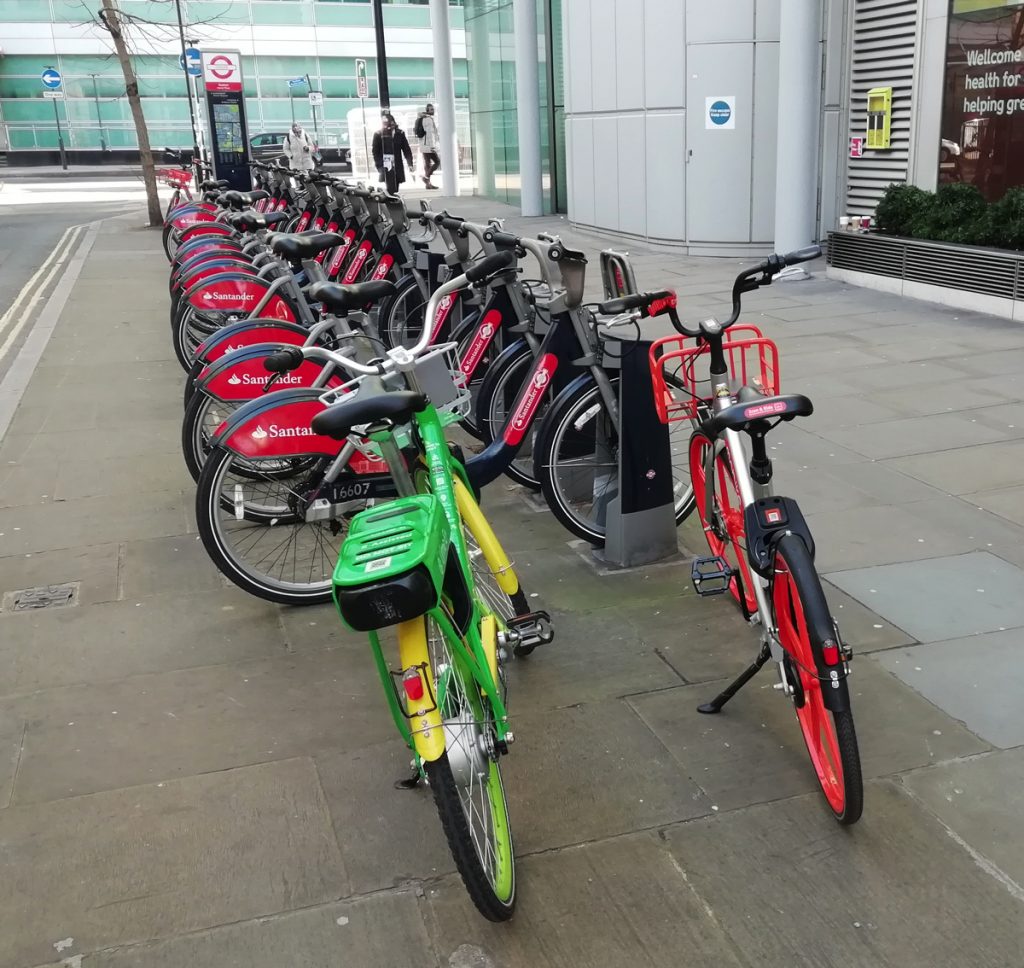
Journey’s end, at the Santander Cycles rack near UCL. Note also the Mobike.
I parked my bike alongside a Santander Cycles rack. There was also a Mobike there. I really like the idea of dockless cycling bikes being available at the “empty” ends of Santander Cycles docking stations – it seems an “obvious” place to leave them, it’s also a good place to “advertise” to people who are in need of a bikeshare of some sorts. (Incidentally, the poster in the Lime basket refers parking in the “sidewalk” twice – needs some UK localisation here, we call them pavements!)
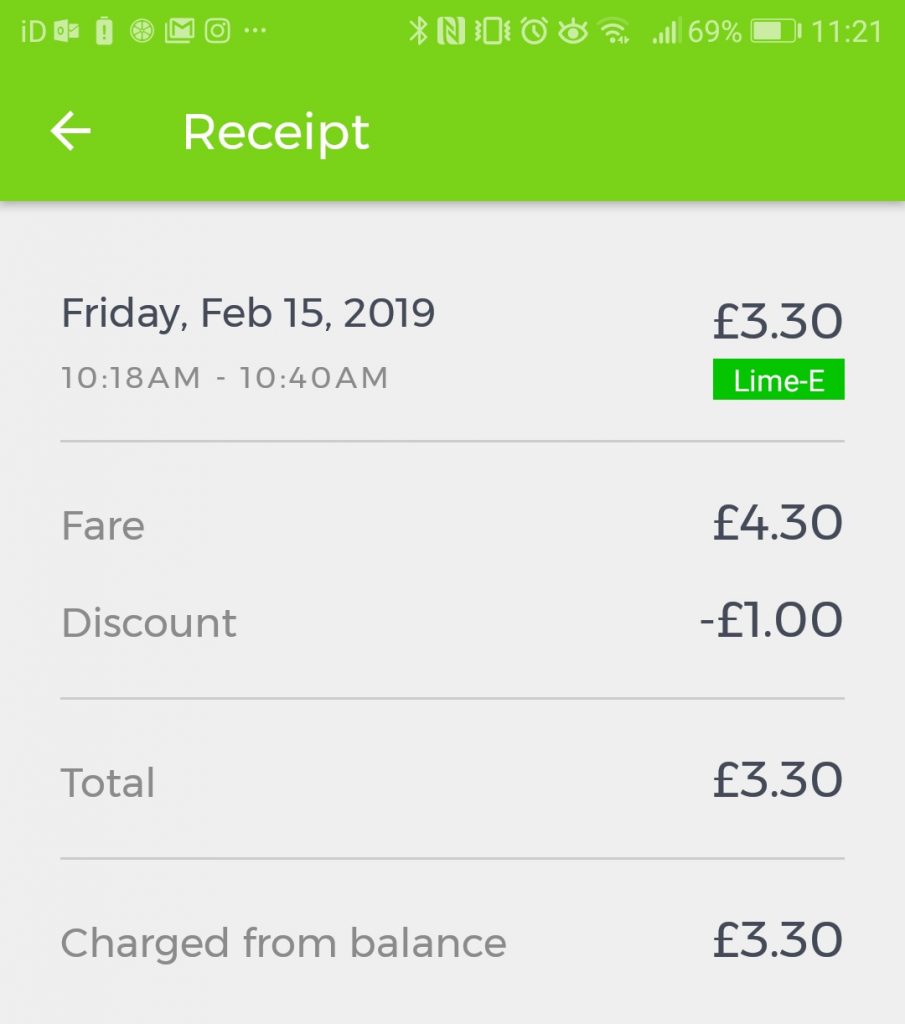
My fare. This is expensive for a Zone 2-1 journey in London.
A bit of bill shock though – £4.30, as it was a 22 minute journey (£1 hire + 15p/minute for 22 minutes.) The £1 was, at least, waived as this was my first ride and I was on a referral (btw use my referral code RVDG4MS if you want your own). The pricing structure means that the temptation to (safely) jump red lights was strong – much more so than on my own bike. There are a lot of traffic lights on the route and everytime I hit red on one of the bigger junctions, it will have cost me 15 pence. That’s, unfortunately, a pretty powerful financial incentive to break the law. I didn’t (obvs) – but I can sympathise somewhat with the Uber Eats and Deliveroo cyclists who are numerous in London but aren’t the greatest at obeying the rules… for them, like the many delivery vans in central London getting tickets for illegal parking, the speed/penalty balance is tilted towards bad behaviour.
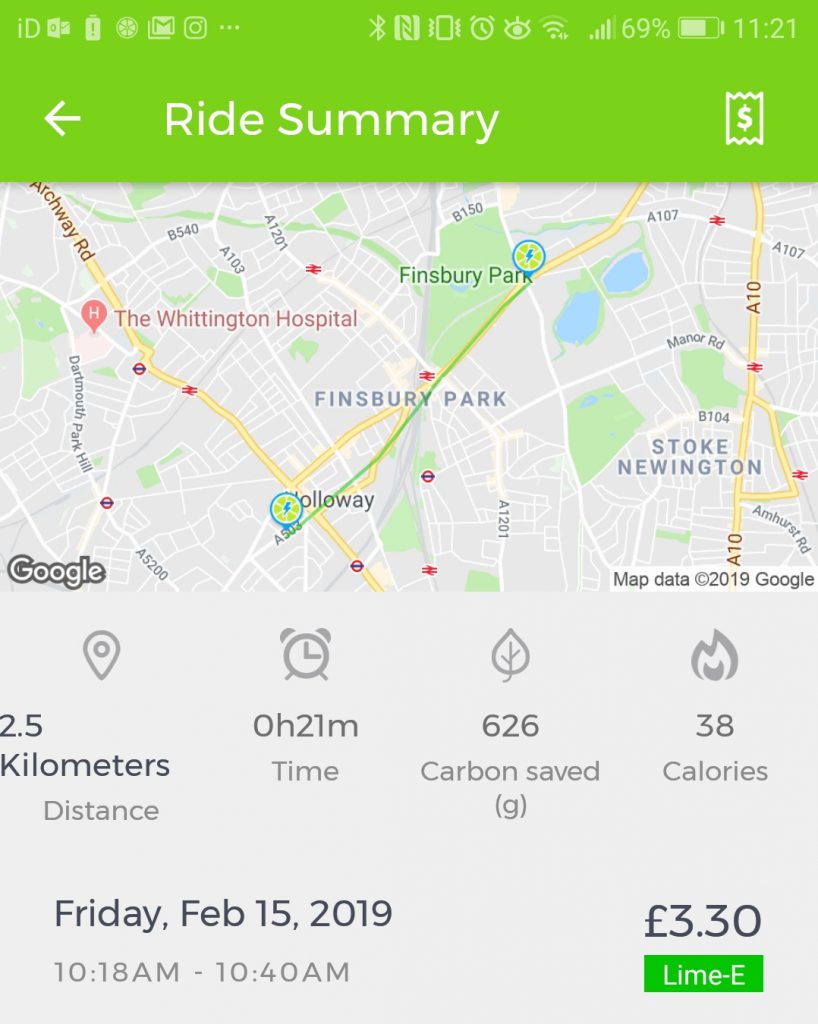
Also, my suspicion is that Lime are making the same cost-saving/risky approach that Mobike/Urbo/Ofo et al have done so – they don’t use have GPS on the bike itself, but are primarily using the GPS on your smartphone. In Lime’s case they may have a SIM card or emergency GPS for retrieving a missing bike – but not in regular operation. When I stopped at the bottom of the hill on Camden Road, I switched away from the Lime app (but had it open in the background) to the Beeline app, to activate my device’s functionality and start sending it GPS information. Unfortunately, it looks like this stopped the Lime app from recording my location – although the clock kept ticking. So, it looks like I only did a 2.5km journey, not the full 7km:
Journey of 2.5km according to Lime app – the “finish point” being where I paused to put on my speedometer and switched to another app in the foreground.Actual journey on the Lime bike – 7km.
This issue may be a Huawei/Android 6.0 thing – it could be because the Lime app doesn’t have permissions to access the GPS in the background – or Huawei’s battery “optimisation” cuts off its connection in the background anyway – this has already caused me problems – but it should have been clear to the app that if it wasn’t getting GPS information from my phone, it should be using the bike’s – so I don’t think the bike has any, or it’s not used.
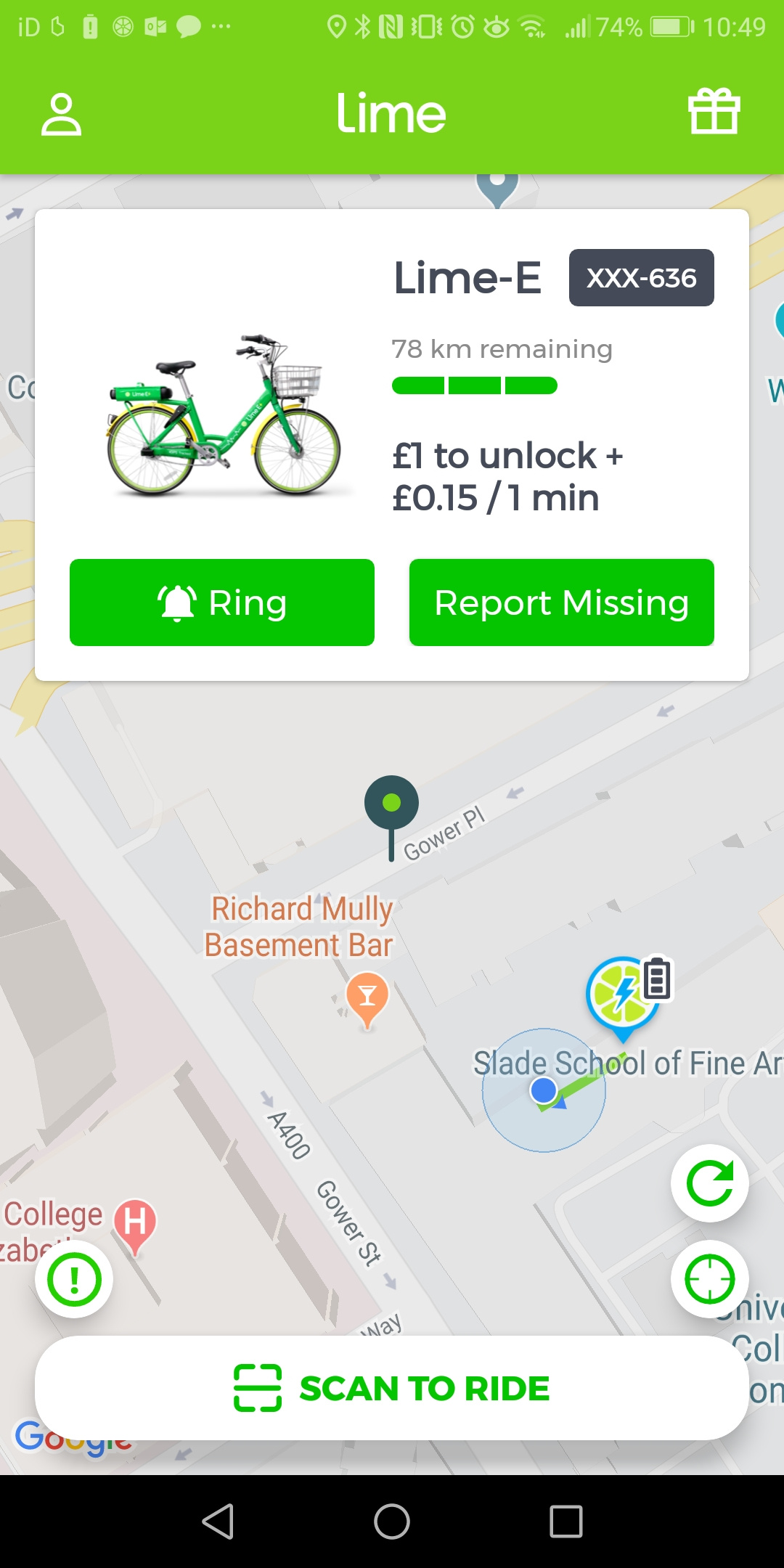
I also didn’t switch back to my Lime app immediately on finishing the ride – I just drew the lock catch back and felt a buzz from the phone that was confirming the ride was finished – a couple of Lime notifications on my lockscreen also indicated that it had detected the journey finish. But – I only unlocked my phone and switched to the app once I had walked ~200m further into the UCL courtyard. The app has then marked the bike as being in the UCL courtyard, not where it actually is (which I am showing here as the green pin to the north):
Wrong location…
This might be quite tricky to someone trying to find the bike – they’d need to head out of UCL, along Gower Street, and then up Gower Place to find it. It looks like Lime again used my phone GPS as soon as it could – well after the ride finish – so has recorded the wrong location.
It may be that it will later use any SIM card on the bike to triangulate its location correctly (or even its GPS if it has it – I suspect not) and snap back to Gower Place. But, this kind of asset tracking trouble is a nightmare both for users (they can’t find the bike) and the operators (they can’t find it either!). This is one of the reasons Ofo essentially failed – they couldn’t find their own bikes but with the higher costs of electric bikes, I’m really suprised to see it again. In mitigation – there are very tall buildings here and the street is narrow – so it could be a simple GPS error too. Indeed, as well as the “lime symbol” (bike location) being wrong, the blue dot (my location) is also wrong – I’m standing at the “crosshairs” symbol on the map above when I took this screenshot.
(Update: As I suspected, the bike does have communication capabilities of its own – it has “phoned home” after an hour or so, and the location has updated to be much closer to its actual location)
So, to conclude, getting a Lime-E to work didn’t work out for me – it cost more than the tube, and took longer, and still required a lot of pedalling. However, I’m not the target user I suspect – it’s people who wouldn’t be cycling anyway, and just want an easy way to get around, not in a great rush, and maybe with a little bit of exercise but nothing too strenuous. I don’t think most parts of London have enough hills, to make the relatively high cost of Lime worth it here – although I would love to try it out on Swains Lane. Maybe a user-configurable app option could change the profile on the bike, to allow a decent boost between 20-25km/h.
I think electric bikeshare has a place in London. We aren’t quite there with Lime. They are doing a lot of things right – not overwhelming the streets, looking after their fleet fairly well (I never see them knocked over) and allowing sensible usage anywhere – but they are also making some of the mistakes which the older dockless companies (Ofo/Urbo/Mobike) also made in London. They are also, like almost all the other companies in the space here, not sharing their bike locations publicly/openly. You either have to open the specific app for the operator, or happen to see a bike when you weren’t expecting it (like me today). If Google Maps, Transit or CityMapper had told me of these, then surely they would be used more and more effectively. Get your GBFS feeds out there, bikeshare companies, regardless of if you are mandated to (big American cities) or not, and let people find your fleet in new and better ways!
I’m not quite convinced we have arrived at the future of smart Mobility as a Service (MAAS) just yet, at least in London, but at least there are various companies working on it. It’s going to be an interesting summer.
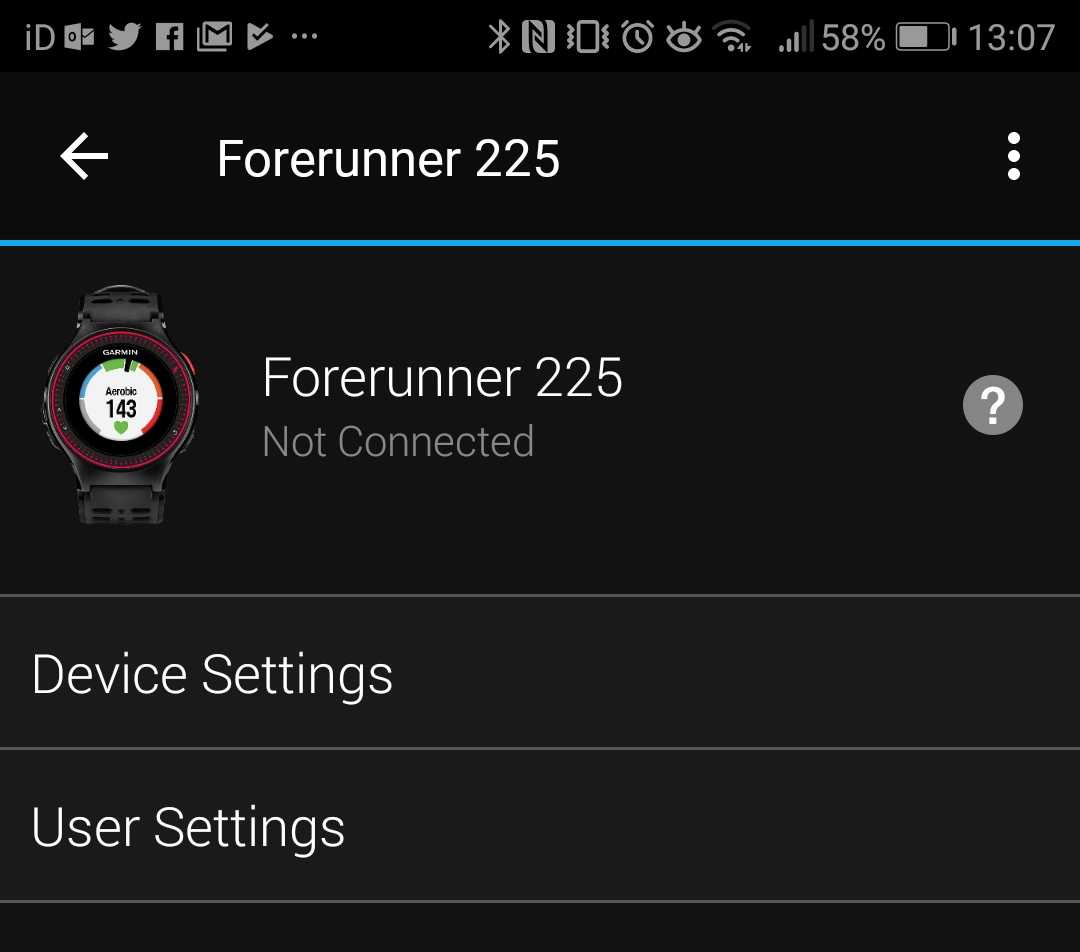
Since getting my most recent Huawei phone (using Android 6.0 “Marshmallow”), I’ve noticed that automatic syncing of my Garmin Forerunner GPS watch often didn’t happen automatically – even if the Garmin Connect app was open. Typically, restarting the phone would solve the issue, and allow a sync to happen – however next time, it would fail, meaning another restart was necessary. Very annoying! There was not a problem with my older Huawei phone, which was on an older (v4.0) version of Android.
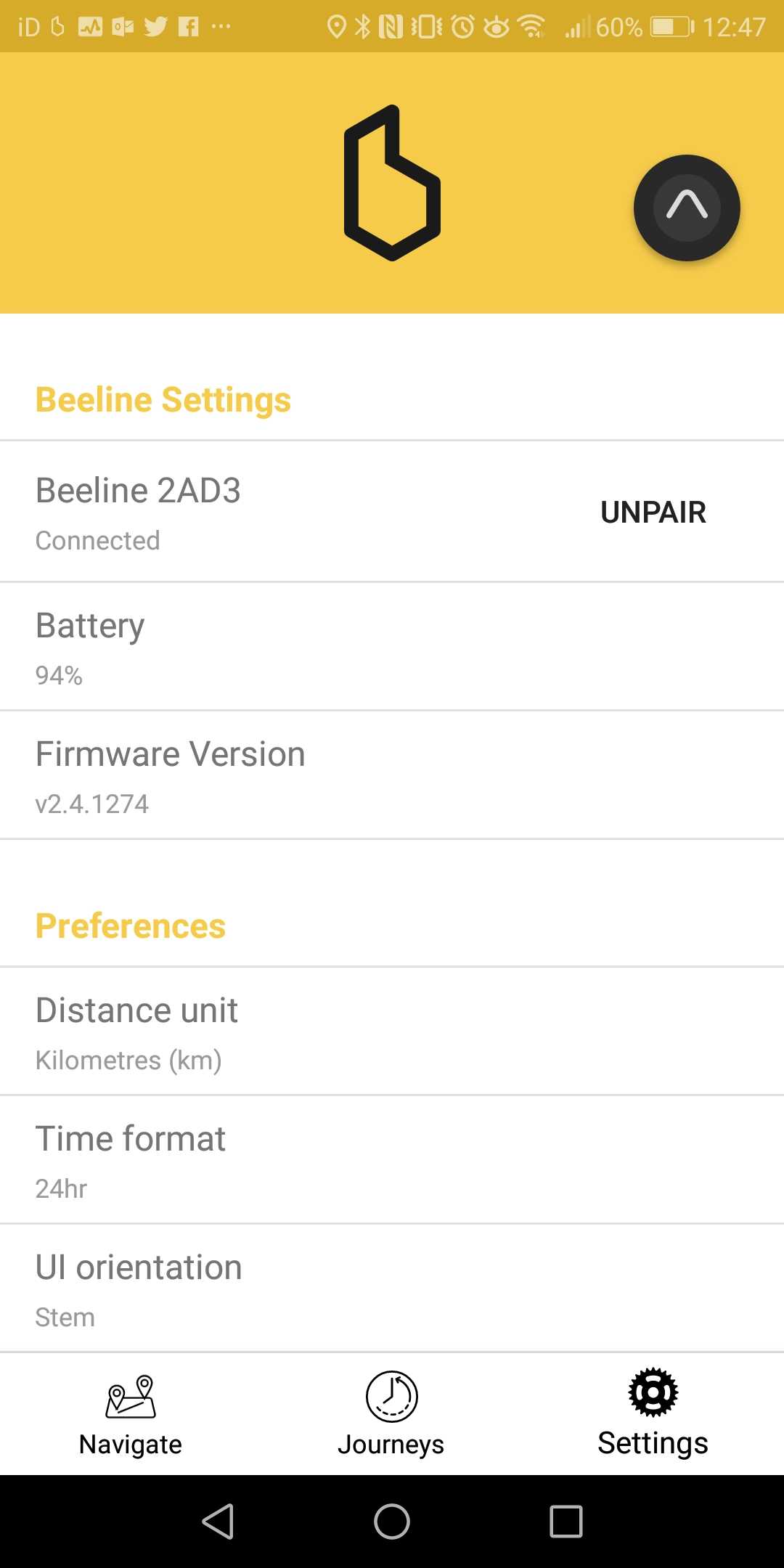
I recently acquired a Beeline smart compass for my bike, and immediately had the same issue. The initial setup was fraught, as it requires a Bluetooth connection, and I was only able to gain one, and pair it through the app, upon restarting my phone. After a few minutes, the connection would drop and, even though it was paired, the Beeline and phone would be unable to find each other.
The problem is due to a bug in the way Huawei’s battery management of its Bluetooth connection to apps, works. A simple configuration change was all that was needed, in order to fix both the Bluetooth connectivity between the Garmin Connect app and my Garmin Forerunner, and between the Beeline app and my Beeline device itself. Once I made the change, I was able to set up Garmin Connect so that it runs in the background, and now I don’t even have to manually open the app in order to sync, after a cycle ride.
The change is surprisingly poorly documented, and also quite hard to find. Indeed it seems to have been specifically hidden away. Essentially, you need to disable Huawei battery management for the app.
The steps you need to do are:
Go to the Settings app.
Choose “Apps & notifications”
Choose “Apps”
Press “Setting” at the bottom.
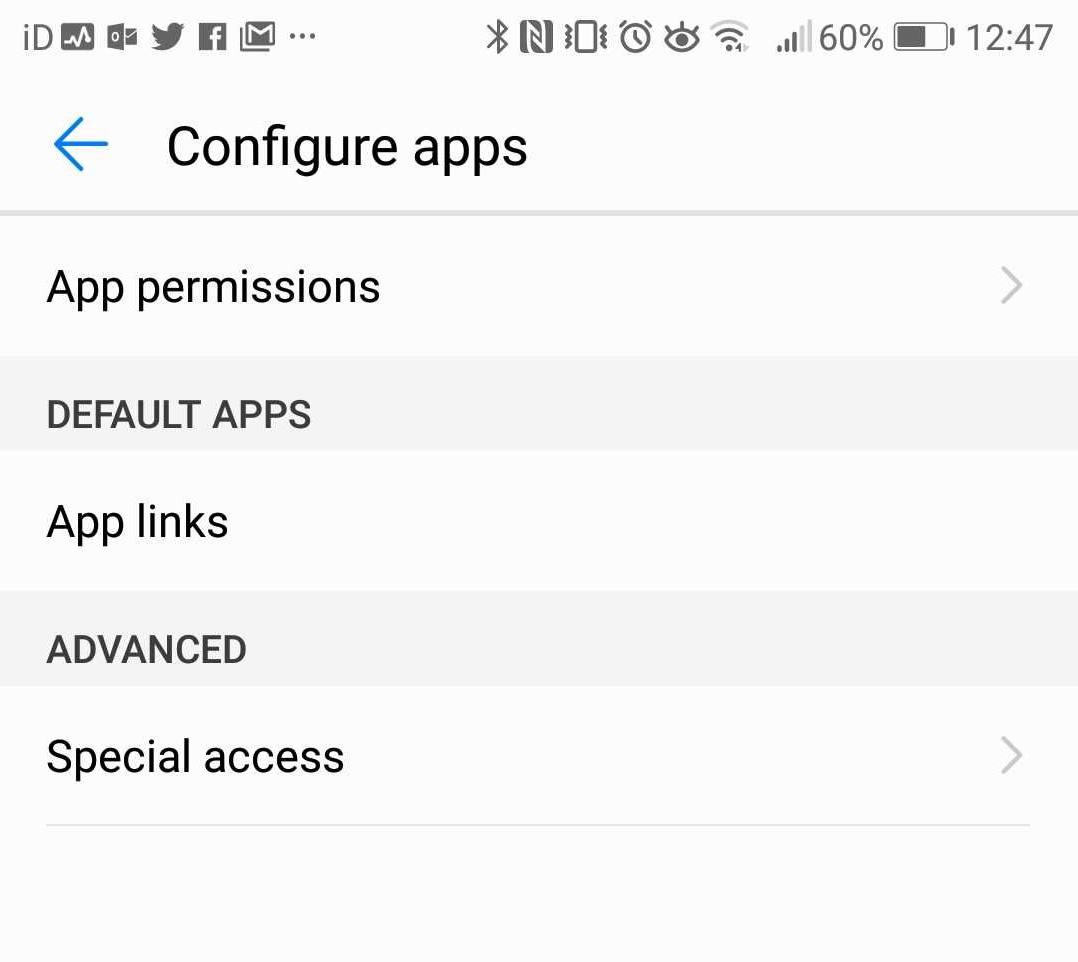
Press “Special access” under the Advanced section.
Press “Ignore battery optimisation”
Press the “Allowed” dropdown at the top.
Choose “All apps”
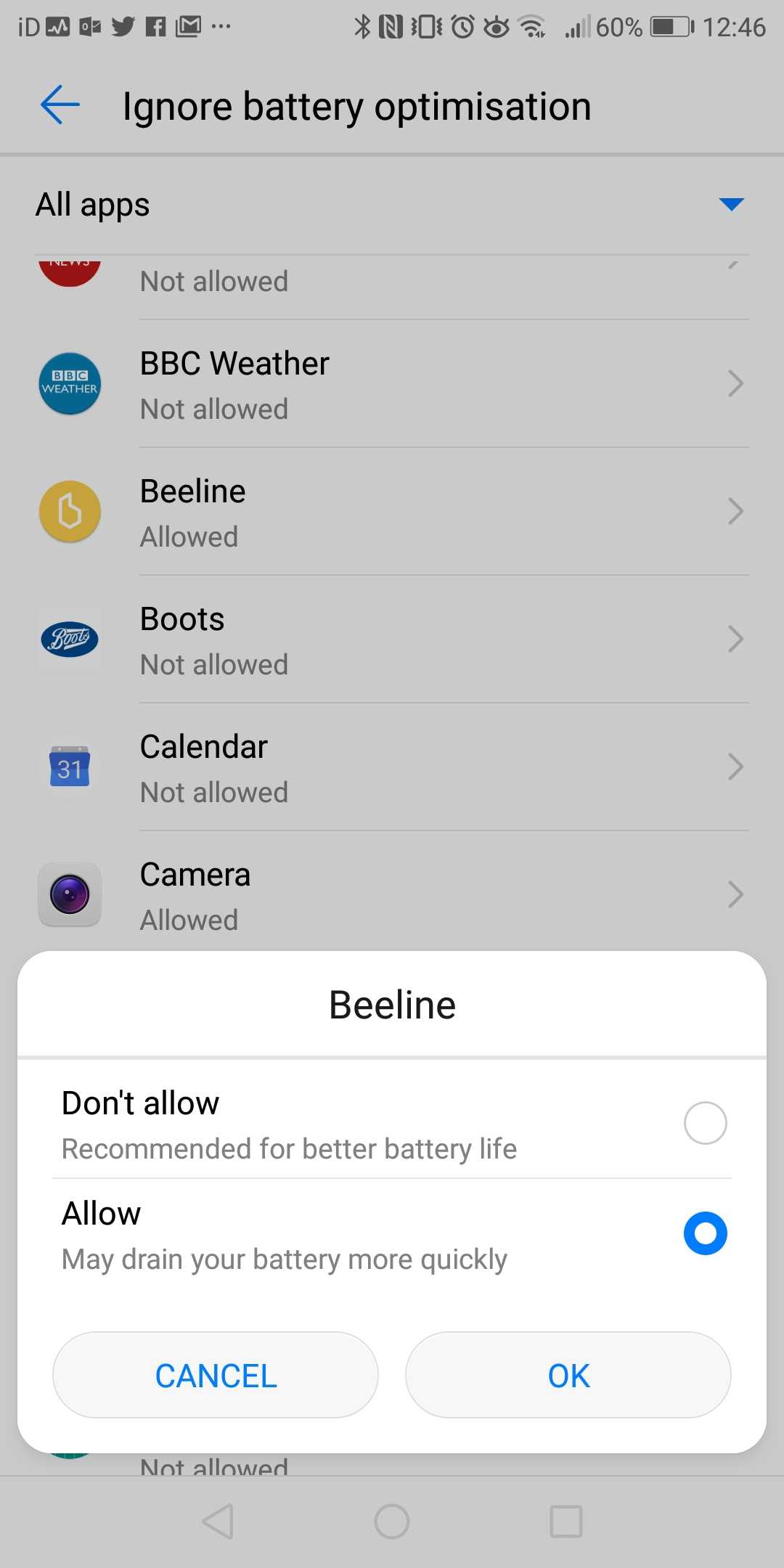
Scroll to the app which is experiencing the Bluetooth connection issues. It will probably have “Not allowed” displayed below it.
Select the app concerned.
Choose the “Allow” option and press OK.
That’s it!
Your Beeline, or Garmin Forerunner, should now generally connect without issues. You have to wait a few seconds, and you may sometimes need to toggle off and on the Bluetooth function from your shortcut panel. But you shouldn’t have to restart your phone just to be able to connect your devices.