Categories
HS2 London

HS2: The Colne Valley Viaduct

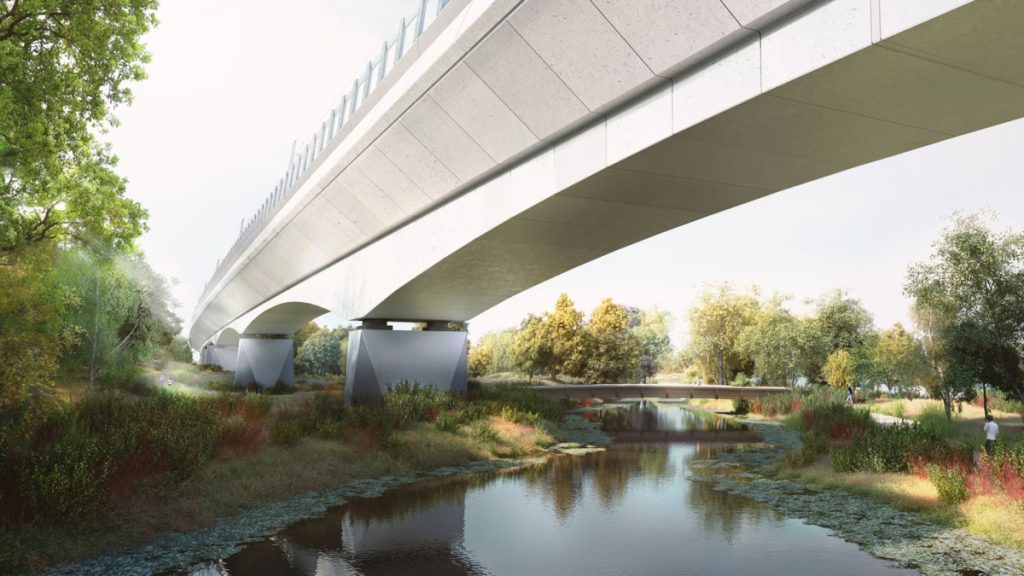
HS2 drawing of the Colne Valley Viaduct crossing the Colne River (slightly realigned here) with a planned foot crossing of the river within the Broadwater Lake Nature Reserve here, which will be added. This will be point 5 on the enumerated satellite image below. @HS2.

In the first post in a mini-series, I looked at how High Speed 2 is impacting West Ruislip and Ickenham. In this second piece, I move slightly west, to look at the Colne Valley Viaduct. At 2.2 miles long, this will be one of the biggest structures on the entire line. The viaduct is what carries the line away from the existing Chiltern Line it has been sitting beside, and outside of London altogther, into the Chiltern Hills. As a symbol of leaving/arriving in the capital, and the scenic nature of the valley it crosses, the Colne Valley Viaduct has the potential to be a “tourist attraction” of the railway – both for the people on it, and also users of the natural park that sits underneath it.

The Colne Valley is a very “wet” valley – it was extensively mined for gravel, and as a result there are numerous lakes. The viaduct crosses a number of these, as well as clipping some natural woodland that has gradually built up. A slight planned route change (moving the curve around 100m north) since the initial plans a few years ago, has resulting in less ancient woodland being destroyed, but the line does still pass close to a number of nature reserves, including through one – Broadwater Lake Nature Reserve – that it has unfortunately closed for many years, and outdoor leisure facilities (two of which are in the process of moving).
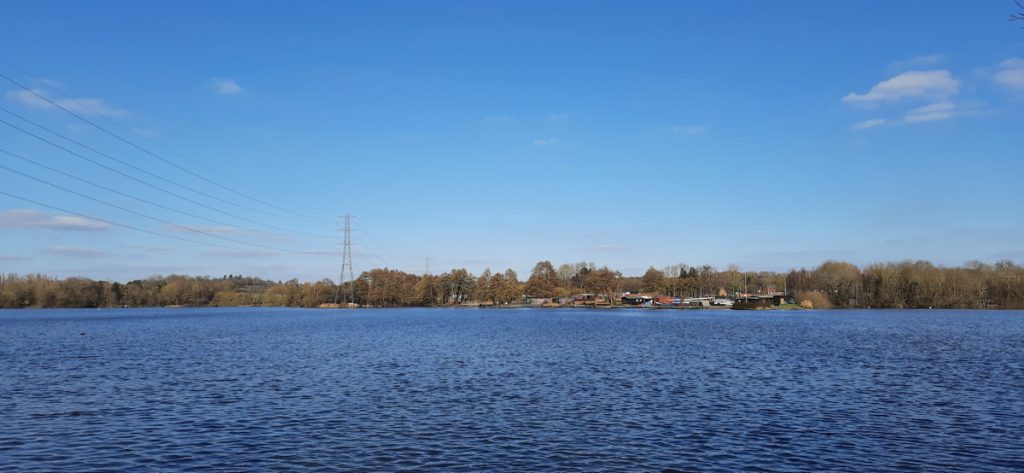
Harefield No. 2 Lake, the pylons to be moved, and Hillingdon Outdoor Activity Centre, are visible from the National Cycle Route 6 track. The viaduct will pass right across this picture. Points 13-15 in the satellite image below.

It’s not the only railway viaduct in the valley, here’s the Chiltern Main Line viaduct just to the south – incidentally the electricity pylon here will be going soon as part of a power rerouting for the new viaduct, so this particular view will improve soon:
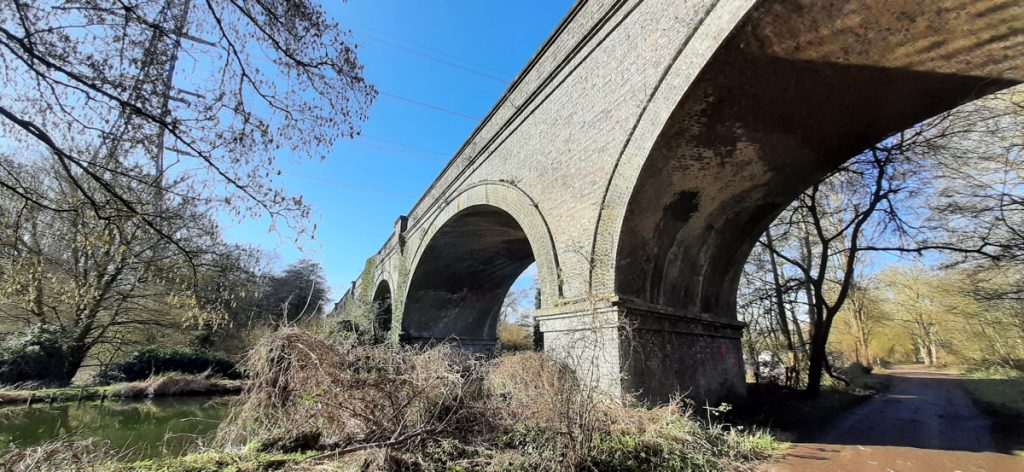
Older viaduct carrying the Chiltern Main Line across the Colne Valley, seen from National Cycle Route 6 beside the Grand Union Canal.

Piling for the piers of the viaduct begins this month and is set to take a number of years, the work moving from west to east, with haul roads currently being built underneath the viaduct. The concrete structures are being built on site. The haul roads will build out from each end, meeting either side of the Grand Union Canal. This break will mean as short as possible a closure for the canal itself – it will only need to close when the deck building girder is directly above it.
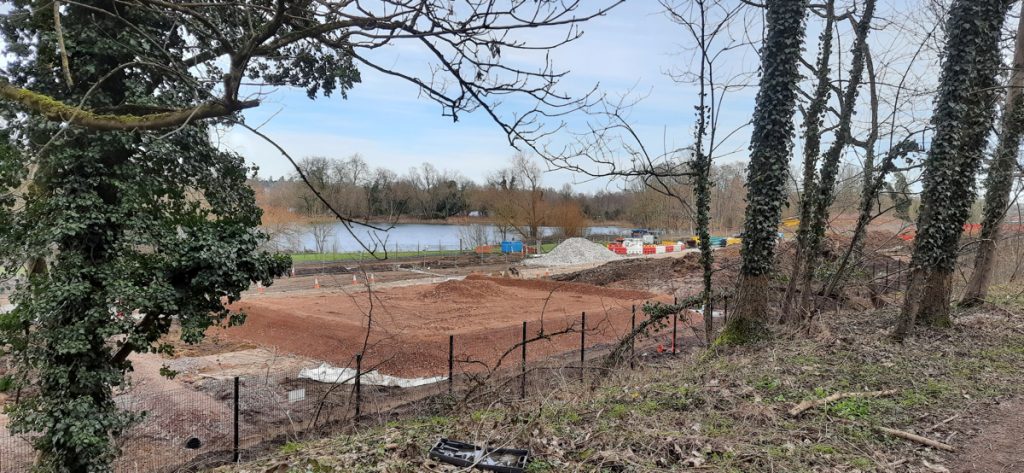
The viaduct beside the A412 North Orbital Road, and Denham Waterski Lake (point 3). A strip of trees, forming part of Battlesford Wood, stood here once. There will be a new path and maintenance road here, formed from the haul road underneath the viaduct, which will connect across a new bridge to Broadwater Nature Reserve, opening up more walking routes across the Colne Valley here.

The large, curving and highly visible nature of the viaduct has meant that it has been possible to justify creating a design for it that is not just a simple set of vertical piers. Instead, sweeping arches will carry the line through the woodlands and across the waterways and lakes.
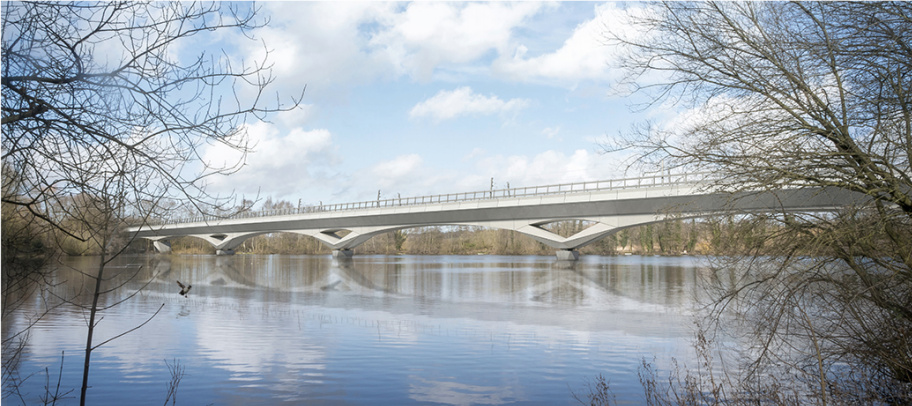
HS2 illustration of the crossing of Korda Lake (point 8) by the viaduct, viewed from south of point 7. © HS2.
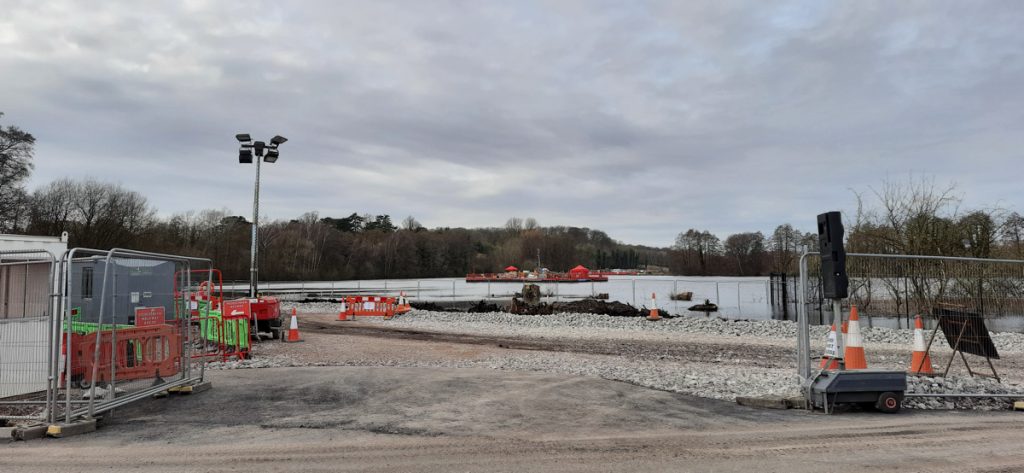
The viaduct will cross Moorhall Road (from where this photo is taken) and Korda Lake, here, directly overhead. A test piling rig is visible in the middle of the lake. Looking towards point 8 from point 9.

The viaduct will have sound barriers but they will mostly be transparent, except for the section facing a new housing development at Denham Film Studios, so that passengers will be able to enjoy the extensive views across the lakes at ~200mph. At this speed, it will take less than a minute to complete cross the valley on the viaduct. As the viaduct is “bookended” by long tunnels at either end, it will be the most obvious visual clue to south-bound passengers that they are about to arrive in London.
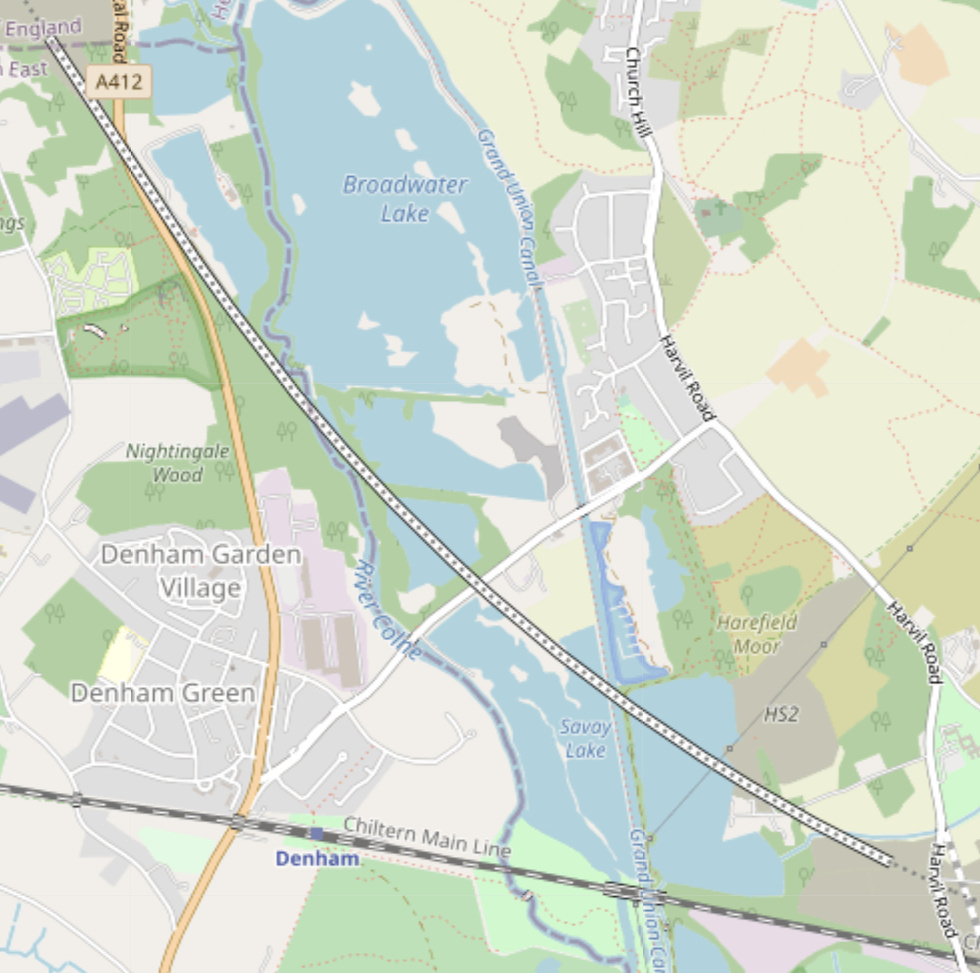
Route of the Colne Valley Viaduct, on OpenStreetMap. The Greater London border follows the River Colne here and so crosses the structure.
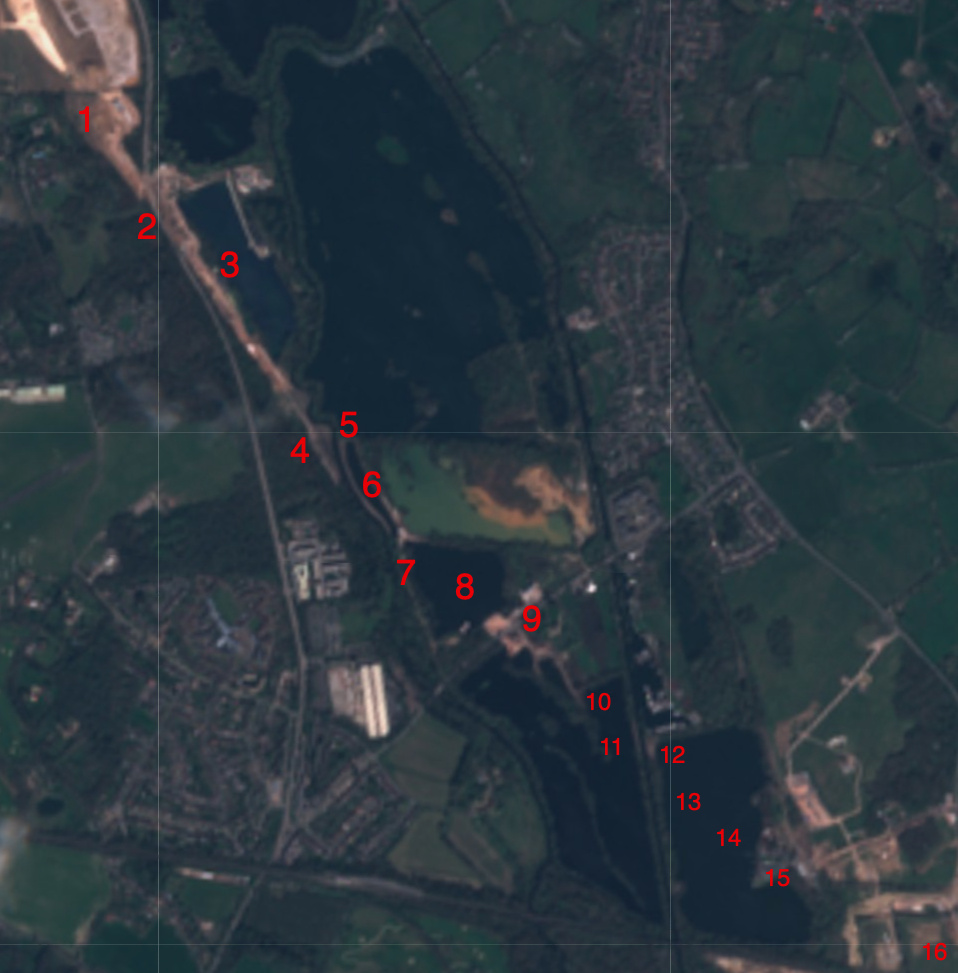
Satellite photograph of the construction worksites along the Colne Valley Viaduct, in early April 2021. © Sentinel Hub. Number key below.

From west to east, the main crossings and affected waterways and buildings are:

  1. Old Shire Lane, a bridleway that also forms the Hertfordshire/Buckinghamshire border. It is currently closed. It will be diverted in a loop to pass under the start of the viaduct. It is due to reopen in towards the end of 2021. A diversion route is further south, via Wyatt’s Covert.
  2. The A412 North Orbital Road. An unpleasant, fast road, which is made even worse at the moment by high dust levels and HS2 construction trucks.
  3. A narrow strip of woodland beside a lake, and the Denham Waterski clubhouse, which is about to be demolished and has a brand new replacement on the opposite shore.
  4. Battlesford Wood, just north of Denham Film Studios.
  5. The River Colne, which will be rerouted slightly here to flow more perpendicularly between two piers of the viaduct. A bridge will also be built here, to connect Battlesford Wood and a new path under the viaduct to the A412 and Wyatt’s Covert, to a nature reserve and Moorhall Road.
  6. Almost the full length of Long Pond (called Long Lake on some maps).
  7. A narrow nature reserve, Broadwater Lake Nature Reserve, which is unfortunately closed for the duration of HS2 construction but will have improved access links afterwards (see above).
  8. Korda Lake – HS2 goes diagonally right across this fishing lake.
  9. Moorhall Road, which goes between Denham Green and South Harefield.
  10. A corner of Savay Lake.
  11. The Grand Union Canal and towpath. A new pier on to Savay Lake will be built here, opening up a view.
  12. A track just east of the canal, that forms National Cycle Route 6.
  13. Diagonally right across Harefield No. 2 lake.
  14. Under a line of pylons that is getting rerouted further east, as it will be too close to the viaduct structure.
  15. Right over the top of Hillingdon Outdoor Activity Centre, which is also closing and moving to an as yet announced location.
  16. The viaduct finally touches down in fields just before Harvil Road.
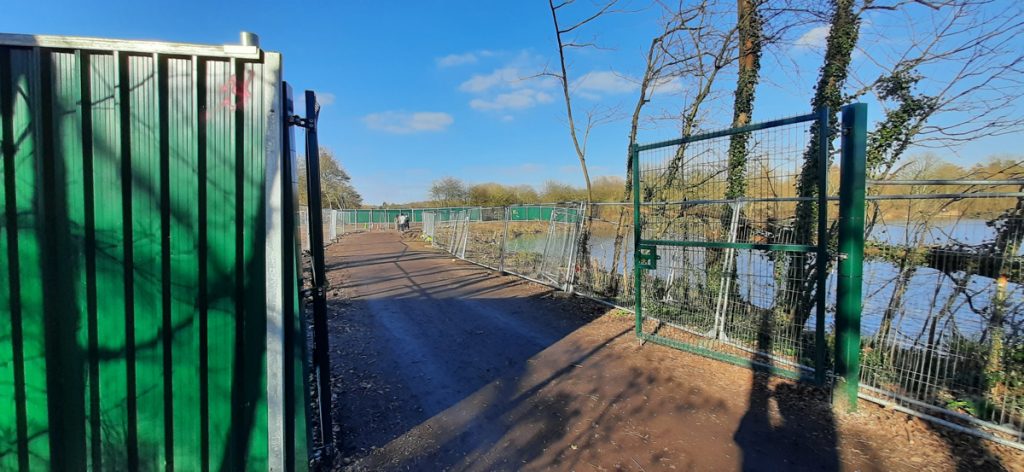
Here’s where HS2 crossings National Cycle Route 6, between Harefield No. 2 Lake and the Grand Union Canal. Point 12 in the satellite image.

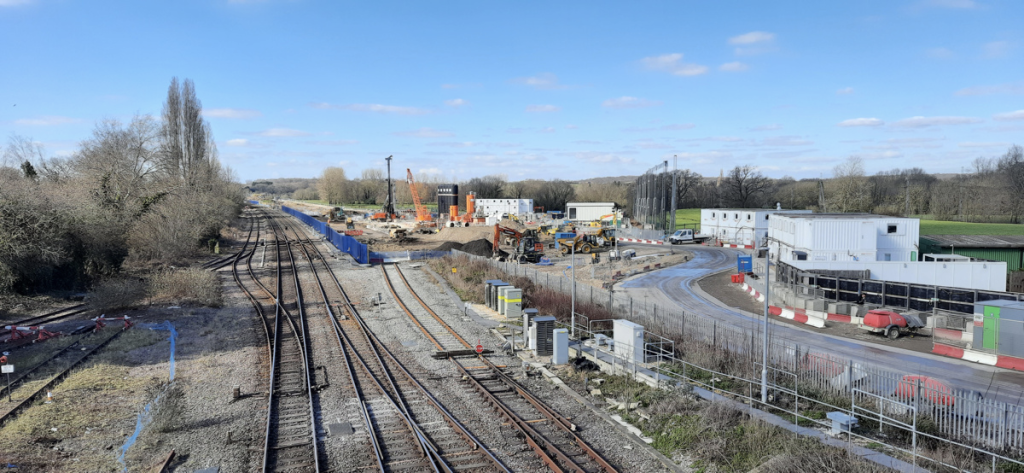
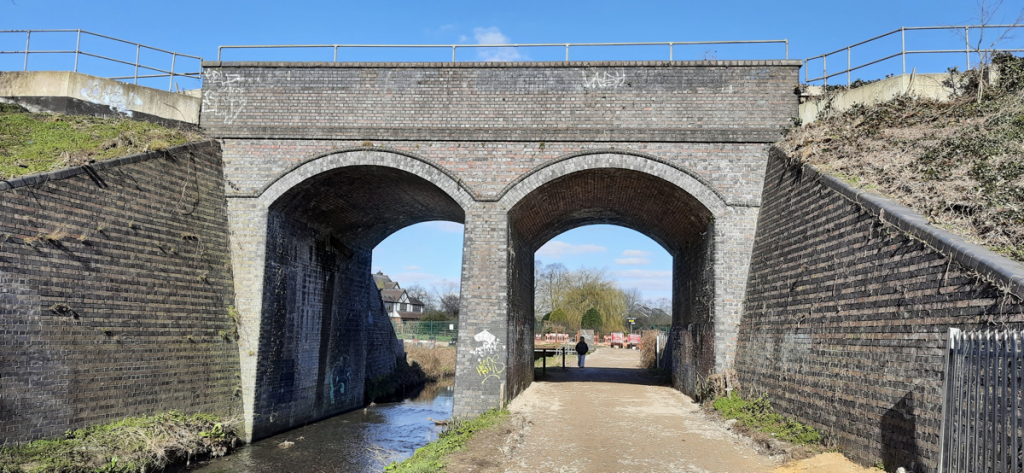
For the last piece in this mini-series, I focus on the huge worksite for both this viaduct and also the Chiltern Tunnels – the Colne Valley Western Slopes.
Categories
HS2

High Speed 2 in Hillingdon

There’s a big building project underway at the moment, High Speed 2 (HS2), and it’s taking a big dent out of my local borough, Hillingdon in west London. Hillingdon is where the forthcoming railway line will burst out of its tunnels from central London, before curving away from the Chiltern Mainline it has been running beside, onto a long viaduct across the Colne Valley, and out of the borough into another set of tunnels by the M25 orbital road, passing beneath the Chiltern Hills on its way to Birmingham and beyond.

Related major works currently include rerouting a large power line that would otherwise run across the viaduct, rerouting gas mains and water mains, straightening and rerouting several roads, building new electricity substations, building or enlarging various access roads for the above, building a “haul road” to run underneath the viaduct for constructing it, creating a factory for the concrete parts for the tunnels and viaduct, and building a long electrical supply cable to power the tunnel boring machines. Plus associated patching up of the existing infrastructure such as footpaths, bored out earth storage and the start of post-project landscaping.

It’s surprisingly hard to find out exactly the true extent of what is going on, at the current time. It’s a hugely complex project, and HS2 comms are therefore having to run local engagement activities in many different sections, all at the same time. The Hillingdon version is a bit of a mess, with updates coming as an incoherent set of PDFs and maps of various formats.

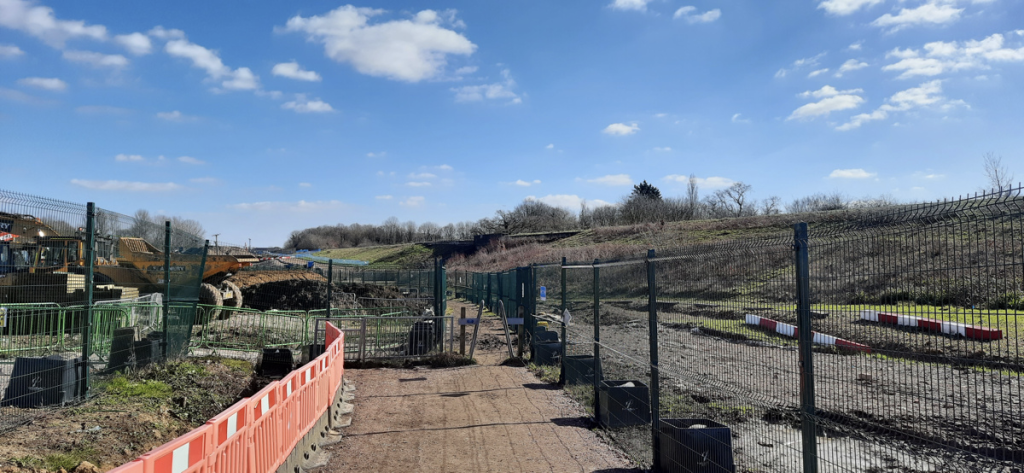
To see what’s going on, I took several trips around the area, crossing most of the places where the line will pass. There is no unified map showing the current areas under HS2’s control, so there were some surprises, with the “orange army” and green security fencing appearing in unexpected locations.

My intention is to visit the construction areas fairly regularly over the next few years, and see how they are changing. It’s fairly easy for me to get there and it’s a pleasant enough cycle.

Starting at the point where HS2 emerges from tunnels, opposite West Ruislip station on the Central Line (and beside and just to the north of the Chiltern Mainline). There will be a tunnel portal here but work here is much less advanced than at the tunnel at the other end of the Colne Valley.

The western tunnel portal for the tunnels from Central London, at West Ruislip.

Ruislip golf course is closed, with HS2 taking a bite out of its southern edge (although the rest of it seems intact, so it’s odd the whole thing is closed). So, I took a route on the south side of the Chiltern Mainline insetad. It was rather a pleasant route, meandering through suburbia, woodland and grassy fields, passing a cricket pitch at one point, before suddenly you are at the River Pinn (of Pinner fame) and on the Celandine Route, a waymarked long distance through the borough. HS2 hoarding appears immediately on the other side of the nice bridge here, but the paths have been upgraded by the company contractors, having turned into a quagmire earlier in the winter.

The Celandine Route passes underneath the Chiltern Mainline (and then a future bridge under HS2), beside the River Pinn. HS2 have kindly upgraded the path here after churning it up.

There is a short public footpath, U46, which I took here to get onto Brakespear Road South. This footpath runs directly underneath the HS2 route, so will vanish soon and will only reappear after works are finished, rerouted slightly to the north. For now, the path has HS2 fencing on both sides, accompanied by various dire warnings about a High Court injunction being in force to stop protestor camps (re)appearing in this area.

U46 public footpath, directly underneath HS2, and hemmed in by construction fences. It’s not long for this world.

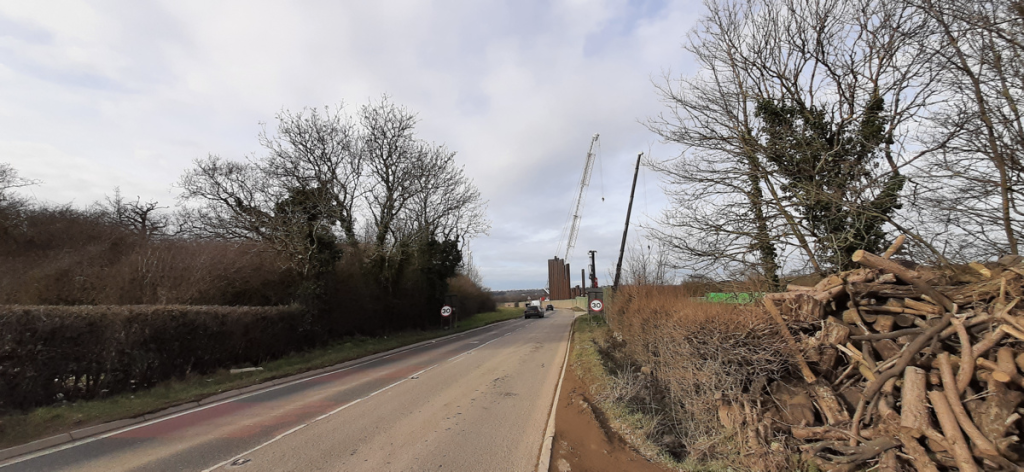
Crossing underneath the existing bridge for the Chiltern Mainline, I took another right of way (U50) which goes through rather waterlogged fields, before ending up at Harvil Road. This is not a pleasant road to cycle along, as the HS2 construction camps run for almost a mile, and the road itself is narrow and twisty (it is getting straightened and rerouted as part of the HS2 works).

Sheet piling at the beginning of the Harvil Road straightening works.

First you pass the worksite for the straightening work and a major water main rerouting, on the right. Then you pass a huge cutting (at least 20m deep) being dug out, then space for a power plant for powering the line, then the line itself, and finally further up on the left an access road being created for the the viaduct works, and one for the powerline rerouting and substation building.

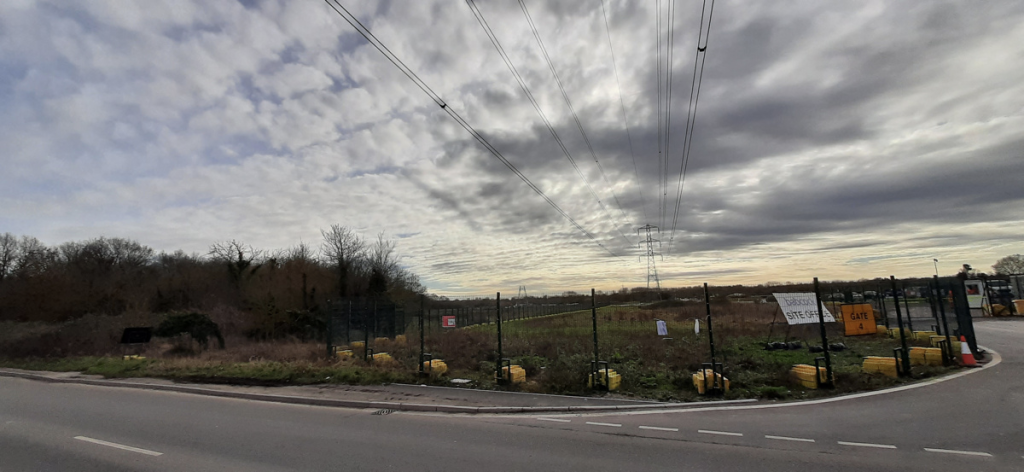
There is, I think, an old public footpath that will be gone for ever, as it will sit under the line and the power plant. Another one nearby, across Harefield Moor, has been rerouted.

Works at Harefield Moor, with a half-built pylon, the start of the diversion, visible to the left of the current one. There should be a reinstated public bridleway here, soon, giving access to the Colne Valley lakes.

Finally, down to the Colne Valley itself and its forthcoming viaduct, but that’s for the next post…

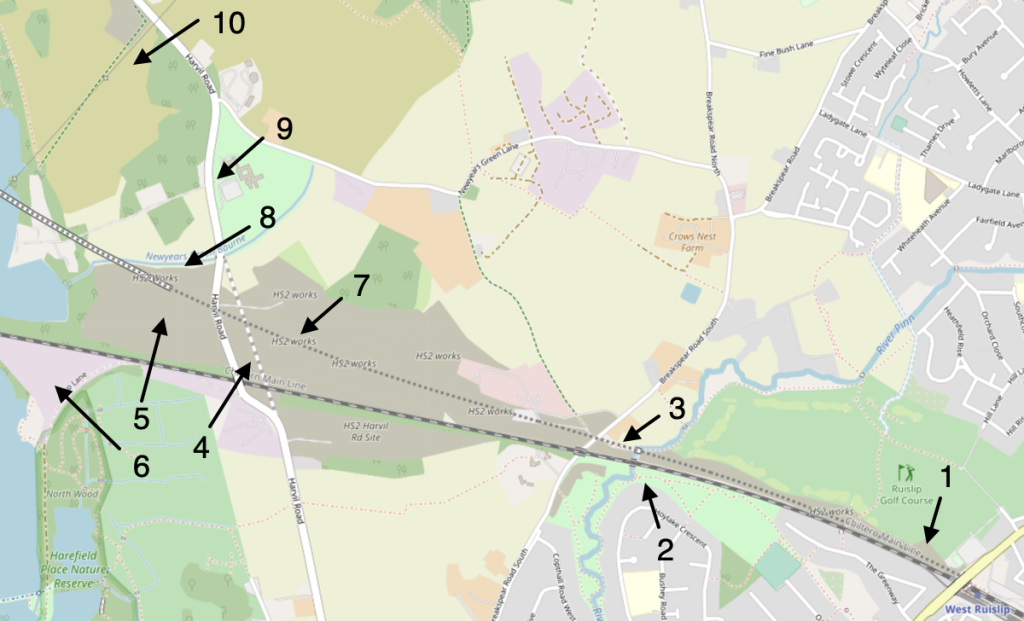
HS2 in Hillingdon (west) – 1: Future portal for the tunnels to central London. 2: Existing bridge (and future bridge) on the Celandine Route at the River Pinn. 3: Path U46. 4: Harvil Road straightening. 5: Future power substation for HS2. 6: Concrete plant being used by HS2, and power line being diverted through. 7: Huge cutting. 8: Start of the Colne Valley Viaduct. 9: Access road for the viaduct construction. 10: Power line rerouting and new substation. Map © OpenStreetMap contributors.